More on Sane Energy Policy


2GreenEnergy financial guru Bill Paul writes in response to my piece on Sane Energy Policy:
I think that if you look at what’s happening in countries OTHER THAN the U.S., there’s reason for optimism. In Japan, South Korea and the EU, governments are working with companies for everyone’s benefit.
You’re absolutely right, Bill. Isn’t that amazing? We were brought up to believe in the greatness of the U.S., and just look at what’s happened. I suppose one could have made a strong case for it in the 20th Century. Certainly the Second World War and the post-war industrial boom made us the envy of the world: financially, militarily, technologically, and, to a certain extent, ethically. But what a disaster this century has been so far.
If there is a silver lining here, it will become visible when and only when we get a grip on corruption, on the power of Big Money to get what it wants from government, and to subjugate the common man. And, as we’ve discussed here so often, if there’s a chance for that, it lies in MoveToAmend.org.
Thanks, Bill, for your continued support.

 In a few hours, we’ll bid so long to another summer Olympics. I always hate to say goodbye; I sorely miss them when they’re gone. The concept of being that good at anything is so impressive to me; I have to think that we all feel the same type of inspiration.
  Some of the waste-to-energy concepts I’ve come across recently should not be discussed over dinner.
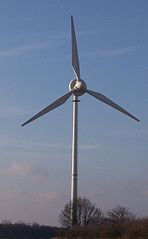 I heard a really good talk about lifecycle analysis (LCA) yesterday that took wind energy as an example, and examined the overall ecological footprint associated with an individual large turbine. On average, about 7.8 megawatt-hours of energy goes into extracting the materials, forging the pieces, transporting, assembling and installing the device, maintaining it through its lifetime, and then dismantling and recycling it when it is no longer useful. However, it will produce, on average, 157.8 megawatt-hours of electricity in the course of its 20-year lifespan, a return of a bit more than 20 to 1.