I notice in your response that you used the word “corruption” to describe the corporate polluters. That might be too strong a word to use in general. (more…)
Have you ever heard the term “clear and present danger”? … When the danger rises to an indisputable level that affects the wellbeing of everyone, we will become united and save the planet.
Larry: I’ve read dozens of your posts here, and I can see that you obviously have a keen intellect. So, given all this, you don’t think there’s a “clear and present danger” associated with the issues that surround our continued dependence on fossil fuels? (more…)
A reader sent me this very clever article that was published in 1969 by Garret Hardin called “The Tragedy of the Commons” with a note that read, “Here’s something that I think might resonate with you.”
I respond:
Wow, that was terrific; I very much agree with the analysis. Thanks very much.
I don’t think there’s much debate that people abuse “the commons” — and for the precise reasons presented so well in the article. The problem is what to do about that.
E.g., how do we go about internalizing the externalities of fossil fuels? (more…)
I like to maintain a level head when it comes to nuclear, and not overplay the danger issue. Having said that, when I come across an article like this piece on Fukushima, I have to say that I feel a certain sense of outrage. The editorial staff of the Washington Post calls the event “scary but non-catastrophic.” I know I sometimes publish stuff that I wish I hadn’t, but this really is a shockingly poor choice of words.
• Financing solar photovoltaics. There is no doubt that homeowners would be more likely to invest in solar if the PV on their roofs could be integrated in their mortgage, just like their plumbing, HVAC, or electrical system.
• Integrating electric vehicles. My friend Paul Scott has enough PV on his roof that his Nissan LEAF very rarely has to plug in to the grid; thus the carbon footprint of his transportation is limited to the manufacturing of the vehicle (and the PV) itself. Not bad! Obviously, he’s an early adopter, but this concept is likely to go mainstream over the coming years.
Most of us read George Orwell’s 1984 in high school, and since incorporated the adjective “Orwellian,” into our vocabularies as a result of the enormous impact this masterpiece made upon us. As it’s usually used to describe language, “Orwellian” refers to words or phrases that have been deliberately manipulated to convey meanings that are in direct opposition to the normal concepts they would have implied. For example, 1984’s protagonist works at the “Ministry of Truth,” whose function is to rewrite history, forever obscuring historic truths from the citizenry. (more…)
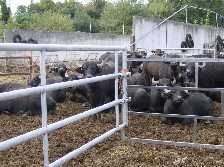
I’m going to be helping my new-found friend, Robert Orr of Manchester, England in his quest to build a facility to turn buffalo dung in Southern Pakistan into fertilizer and energy. How much dung are we talking about? It’s hard to imagine. First, try to picture 400,000 dairy buffaloes in an area of a few square miles – several hundred per acre. Now, figure that, between solids and liquids, you’re getting 25 pounds per day per head, or about 8,000 tons per day. (more…)
The PBS special “Electric Nation” is a reasonably fair-minded and certainly non-hysterical treatment of the various modes of how we in the U.S. generate electricity. Personally, had I written the show, I would have been quite a bit more hysterical, emphasizing the utter insanity of our business-as-usual approach to fossil fuels and our failure to form a workable energy policy, even in the face of:
• Global climate change
• Ocean acidification
• Peak oil
• Empowering terrorist and other anti-American regimes
• Escalating rates of lung disease
Yet they were good enough to quote Thomas Edison’s famous simile regarding our shortsightedness when it comes to energy:
“We are like tenant farmers chopping down the fence around our house for fuel when we should be using Nature’s inexhaustible sources of energy–sun, wind and tide.”
Last night I had a dinner meeting during which I was asked what I thought about a business plan that proposed to grow sugarcane (from which to make ethanol) in California’s Imperial Valley, one of the driest parts of the world. I was a bit stunned. Isn’t this equivalent to growing mangoes in Siberia, or raising polar bears in Panama? (more…)
Here’s an article on the creation of “biorock,” coral reefs that grow extra quickly when an electrical current, generated with photovoltaics on the ocean’s surface, is applied to steel girders on the seabed.
Proponents argue that the replacing of the huge number of reefs that have been damaged by pollution is an extremely important task. They note that more than a quarter of the world’s reefs have died in the past few decades and that at least another quarter will perish within the coming twenty years.
However, environmentalists are mixed on the idea. A reader from Costa Rica who wishes to develop an eco-friendly way to raise oysters writes: “scientists and ecologists here are too conservative and ambientalista (“environmentalist”) lobbyists are against it.”


 Frequent commenter Larry Lemmert writes: