I owned a small but growing business for almost 30 years starting in the 1980s, and, until I hired a full-time IT guy to replace me in, I’ll say 1994, I was the IT guy for my company that had, at the time, I’ll guess 40 employees. I knew even then that the Microsoft operating system that was dominant in terms of market share was a complete disaster. It’s sad to walk forward almost 20 years and see the same dynamics still in play.
A colleague wrote a few minutes ago to tell me that the government of Bonaire may want our advice re: sustainability. I wrote back:
That is terrific news. Obviously there are other aspects to sustainability, but to boil this down to its essence, we need to examine the trajectory under which they can replace fossil fuels with renewable energy. Of course, this is a discussion that most nations are entertaining, but nowhere is it more acute than on island nations, where energy is expensive (almost exclusively imported diesel), national security is most severely at risk, and the greatest element of GDP (tourism) is also threatened. Is it conceivable that the flow of diesel could be cut off or, at least, become exorbitantly expensive? You bet. Do tourists like fumes belched over them as they’re trying to enjoy the sunset pictured to the left? Nope. (more…)
A friend sent me this piece on photosynthesis and photovoltaics, which claims that commercially viable biohybrid solar cells would be a manifold breakthrough for solar power; their key components are abundant and renewable, so producing them would cost less and be better for the environment than traditional solar cells.
I’m not an expert on this, but I’m extremely skeptical. Biological processes evolved over 4 billion years to enhance the survival, growth, and reproductive capabilities of the organism, not to retain unneeded energy so people could come along in the 21st Century and run their air conditioners. The efficiency of garden-variety PV is about 25% and steadily improving. Biological processes will not compete with that.
I’m not an advocate of war as a means of resolving disputes among nations, and I think the world would be a better place had we taken Dwight Eisenhower’s advice and not created the “military industrial complex” that he so specifically warned us against. That’s why I find it ironic that the military is arguably the strongest force in the U.S. pushing in the direction of renewable energy. This excellent article really nails what’s happening here and why it’s happening in this arena. Essentially, clean energy, at least as the military perceives it, is not a liberal or conservative issue, but one of saving lives and improving national security.
Here’s a terrific set of infographics on energy security, i.e., the concept of preventing impact to our lives due to a disruption of energy.
Obviously, this needs to be a huge factor in the discussion surrounding renewables. To the degree that the U.S. develops solar, wind, biomass, hydro, and geothermal energy, it will be immune from potential disruptions. Strangely, this conversation seems to be taking a back seat here.
But I have to laugh when I see pieces like this that either ignore the environmental issues associated with clean energy and fossil fuels altogether, or mention them very gingerly and obliquely, as is the case here. It’s a sad commentary on who we are that, if you wish to be taken seriously here in 2012 U.S. politics, you darn well better not care too much about what we’re doing to our planet.
Here’s an email conversation I just had with a friend:
Friend: Per the US Bureau of Labor Statistics, sunlight is the most abundant source of potential energy on the planet. If harnessed properly, sunlight could easily exceed current and future electricity demand. According to the Department of Energy, every hour, enough energy from the sun reaches Earth to meet the world’s energy usage for an entire year.
Craig: Yes. We get 6000 times more power from the sun than all seven billion of us use.
Friend: It appears that we get even more than that, according to the DOE — 8,760 vs. 6000. What’s the source of your 6,000 figure?
Craig: Gosh, I don’t remember; I’ve been using that number for years. It’s the enormous total power of the sun times the infinitessimally small fraction that the Earth occupies in the surface area of a sphere 93 million miles in radius.
In any case, the real point, obviously, is that it’s a ton more than we need; the challenge incumbent on us is to harvest it cost-effectively — and we’re very close. Btw, that’s what blows my mind about the effectiveness of the PR hatchet-job that the entrenched interests have done to create renewable energy naysayers. There are tens of millions of Americans who completely scorn the concept of solar and wind, on the basis that they are told it’s outrageously expensive. It’s not. We’re very close to grid-parity. With a little effort, we’ll be there soon. Even without that effort, we’ll get there eventually. The question is how long the fossil fuels and nuclear people will continue to dominate the landscape, and how much damage we will have done to our home planet in the process.
One of the most prominent features of environmentalism is the profound political rift it causes. I’m reminded of this as we celebrate the 50th anniversary of Rachel Carson’s Silent Spring, which many credit as the launching pad for the modern environmentalist movement.
But precisely why is the area so divisive? Wouldn’t one think that a respect for the natural world on the only planet we have would fit with practically any rational philosophic viewpoint? In a new biography of Carson, William Souder writes: “The hostile reaction to Silent Spring contained the seeds of a partisan divide over environmental matters that has since hardened into a permanent wall of bitterness and mistrust….. (yet) there is no objective reason why environmentalism should be the exclusive province of any one political party or ideology.”
Sure, there is no objective reason, but that sure hasn’t prevented the subject to be divided across party lines, at least in the U.S. I’ve had conversations with people who tell me that the people who share my viewpoints on environmental regulation are transplants from the pre-1989 USSR, hell-bent on destroying capitalism. I normally respond: “Dude, that’s a bit glib. I was a businessman for 30 years. I had hundreds of employees and clients all over the world. I think you’re going to have to look at this a little more deeply if you want to get at the truth.”
Yet such discourse does little to change anyone’s mind on the subject.
Eric McAfee is an entrepreneur, venture capitalist, and philanthropist, founding and funding companies in renewable energy, oil and gas, agriculture, networking devices and enterprise software. Given that level of success, I tried to absorb every word of his talk at last week’s Renewable Energy Finance Forum.
Among Eric’s key messages was that start-ups need big brothers. Just as people of my (unimposing) stature are rightfully afraid to walk through bad parts of town, we feel safer when accompanied by a six-foot-nine-inch, 275-pound friend. (more…)
When I added Langton Makoni to my LinkedIn network, he wrote:
Thanks for the add. I have been following 2GreenEnergy for a while now. I must say, the expansive pool of vital information you provide has greatly assisted us in promoting the Renewable Energy Franchise Network Partnership Program (an initiative we developed and have been working on in developing countries in a bid to facilitate the extensive transfer of renewable energy technology).
What you guys are advocating has brought a lot of significance. Keep up the great work!
And thank you for the kind words, Langton. I’m happy to do what I can. Ironically, renewable energy may be of more significance to the developing world than anywhere else. That’s because:
• On a per kilowatt-hour basis, the energy consumed in the developing world is more damaging ecologically than anywhere else on Earth (largely burning wood from forests), and
• The absense of rural electrification means reducing the reach and quality of education. This is a huge issue that affects population growth, as educated women tend to have smaller, stronger families.


 A colleague wrote a few minutes ago to tell me that the government of Bonaire may want our advice re: sustainability. I wrote back:
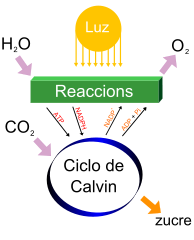 A friend sent me this piece on
  Here’s an
  Here’s an email conversation I just had with a friend:
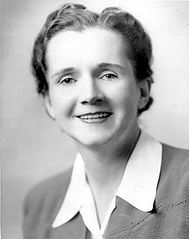 One of the most prominent features of environmentalism is the profound political rift it causes. I’m reminded of this as we celebrate the 50th anniversary of
  Eric McAfee is an entrepreneur, venture capitalist, and philanthropist, founding and funding companies in renewable energy, oil and gas, agriculture, networking devices and enterprise software. Given that level of success, I tried to absorb every word of his talk at last week’s Renewable Energy Finance Forum.
 When I added Langton Makoni to my LinkedIn network, he wrote:


