After Wednesday night’s debate, I became one of literally millions wishing to give U.S. President Barack Obama advice, and, for that reason, I certainly do not believe that what I’m about to write has any particular importance. Having said that, here’s a brief “open letter.”
Mr. President:
A great number of us who viewed your debate on October 3rd were astonished that you were either unwilling or unable to defend yourself vis-à-vis America’s energy policy, and thus I offer a few “talking points” for your consideration on the subject: (more…)
Yesterday started with a drive south to visit my friend, WindStream CEO Dan Bates. WindStream is one of the very few micro-wind products that I favor, in that it appears that they have come across one of the very few strategies that has driven out costs without doing the same to quality.
From there, it was another 40 miles or so south to a fantastic luncheon in which I was introduced to the executive director of the National Water Research Institute. The connection between water and energy, the so-called “water-energy nexus,” is an increasingly important facet of the drive towards sustainability, and it was great to get to know one of the real movers and shakers.
Then it was back north, barely beating the late afternoon traffic, enabling me to hit an IEEE cleantech conference on the way home, where my friend Ron Pretlac, CEO of Green Tech Motors, was talking up his new Large Air Gap Electric Ring (LAGER), a new take on high-efficiency electric motors.
After a day like that, it was indeed time for a lager – a cool one.
Is it only my imagination, or did Obama fail to defend body blows on clean energy last night? I thought he gave a horrible performance on energy issues! Very, very weak. Are you planning to comment on your blog?
Yes, it was discouraging.
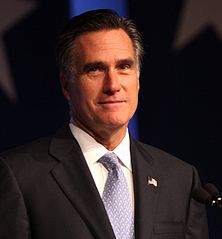
Part of me excuses Obama because, 24 X 7, he’s actively managing the most important single entity on the planet. His opponent, admittedly a smart guy, can spend all his waking hours sharpening his tongue. But regardless, Romney did a terrific job. My congratulations to a master in his craft.
The other part of me suggests that Obama, whose expressed energy policy is “all of the above,” (i.e., that we need to pursue clean coal, gas, nuclear, and renewables in all their forms) really deserved exactly what he got. His lack of clarity and leadership in a critical time makes his position only slightly less ludicrous than Romney’s.
It’s a symptom of the political zeitgeist, based squarely on Big Money, where real integrity is pretty-much entirely absent.
As you know, I applaud Obama for having rescued the U.S. from the “drill baby drill” mentality that he inherited from his predecessor (whose name is no longer used in polite company — nor any other, as far as I can discern). But the state of our current political discourse has most certainly sunk to a new low.
In the period that precedes each election Tuesday, the Ghost of Democracy Past is paraded out in front of us in an effort to convince us that We the People have some legitimate participation in our government. On cue, the ghost returns silent to its grave each election Wednesday, at which point we go back to living under the brutal pounding of the will of the aforementioned Big Money.
Sorry, but it’s hard to take this theater too seriously.
Here’s a two-minute interview with Steve Jobs in which he tells you that you can be a greater person and live a more dynamic life than the world around you would have you believe. That’s profoundly beautiful, and completely true.
In response to my piece calling for an energy policy in the U.S., frequent commenter Dr. James Gover, author, speaker, and professor of electrical engineering at Kettering University, made a few interesting points, for which I thank him:
1) In the U.S., policy is established in response to the wishes of the public. Each president establishes energy policies believed to be consistent with public wishes, with particular attention given to the wishes of those who support the president. The process of policy development in the U.S. requires the public to be well informed on the alternatives and the costs and benefits of each.
Can’t the U.S. do something similar? It’s not like we don’t have policies around here. We have policies that govern our policies. How hard would it be to say something like: “People are dropping like flies as a result of burning hydrocarbons, we’re empowering our enemies by buying oil from them, our utilities have no incentive to change what they’re doing, and we’re ruining our environment. And here’s what we’re going to do about it over the next 20 years.”
It doesn’t sound like an insurmountable challenge. I could write the outline in about 20 minutes.
And, btw, Finland, on behalf of all seven billion of us who share this tiny planet: Congratulations, and thank you.
People often ask me to tell them what’s happening in the energy world in an abbreviated form. That’s not particularly easy, as there are many forces at work right now that are pushing in two different directions at the same time. Here’s a quick list.
Why is the Migration to Renewables So Slow To Occur?
• The world is more corrupt than it used to be; big money wants the status quo, and is generally able to buy it from Congress.
• The recession; investors are nervous; uncertainty about the legal side, the disappearance of the 1603 (cash grant), PTC (production tax credit), etc. To a large degree, this is a result of the above.
• Low natural gas prices.
• The energy industry continues to spread lies about climate change and other environmental issues.
• The European debt crisis has put a crimp in clean energy investment in the EU.
Sunny Florida has sufficient sunshine to power 20 million homes. Florida Gov. Rick Scott (R) when campaigning vowed to create 700,000 jobs. Upon election, he axed programs that centered on renewable energy. The Sunshine State now ranks dead last in creating green jobs. That’s right, it ranks 50th. (Vermont is #1).
Former Pres. Bill Clinton recently spoke of cloudy Germany employing 300,000 workers in the renewable energy sector. That nation aims to retire coal burning and nuclear power plants (as will Japan).
Correlated to population, America could create one million green collar jobs by echoing Germany, and other EU countries. Even China is ahead of America in energy efficiency. (more…)
There are fewer more important tasks for green living than curbing our energy use. With summers hotter than ever and winters more cold, it is difficult to do this. But we can at least help minimize our usage through other means.
Many of these tricks are simple common sense. Turn off lights when you don’t use them. Try not to use a washer, dryer or dishwasher for small loads. Limit television and computer use. Put PC’s and laptops on energy saving settings. Buy appliances that have an energy saver rating. Use fans instead of the air conditioner or swamp cooler. Bundle up in winter and keep the heater low. All of these are great tips for reducing your impact on the environment. (more…)
The issues regarding hydraulic fracturing or “fracking” are considerably growing as risk analysts have issued their concerns regarding the contaminated waste water coming from hydraulic fracking wells have a great potential of polluting rivers and other sources of water within an area. The same analysts have also called out for additional mandatory steps in order to reduce or stop the contamination of drinking water sources from salts or other radioactive materials, such as uranium, radon and radium. You should know that these three are just some of the many hazardous chemicals used by companies who harvest natural gas through hydraulic fracturing. These findings and recommendations are just some of the issues that surrounds hydraulic fracturing ever since it was placed under public and government scrutiny because of its potential risks to the environment. (more…)


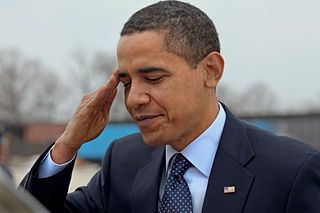 After Wednesday night’s debate, I became one of literally millions wishing to give U.S. President Barack Obama advice, and, for that reason, I certainly do not believe that what I’m about to write has any particular importance. Having said that, here’s a brief “open letter.”
 Yesterday started with a drive south to visit my friend, WindStream CEO Dan Bates. WindStream is one of the very few micro-wind products that I favor, in that it appears that they have come across one of the very few strategies that has driven out costs without doing the same to quality.
 A friend writes:
 In response to my piece calling for an
 People often ask me to tell them what’s happening in the energy world in an abbreviated form. That’s not particularly easy, as there are many forces at work right now that are pushing in two different directions at the same time. Here’s a quick list.
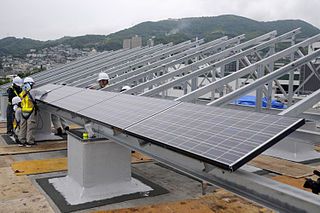 Sunny Florida has sufficient sunshine to power 20 million homes. Florida Gov. Rick Scott (R) when campaigning vowed to create 700,000 jobs. Upon election, he axed programs that centered on renewable energy. The Sunshine State now ranks dead last in creating green jobs. That’s right, it ranks 50th. (Vermont is #1).
 The issues regarding hydraulic fracturing or “fracking” are considerably growing as risk analysts have issued their concerns regarding the contaminated waste water coming from hydraulic fracking wells have a great potential of polluting rivers and other sources of water within an area. The same analysts have also called out for additional mandatory steps in order to reduce or stop the contamination of drinking water sources from salts or other radioactive materials, such as uranium, radon and radium. You should know that these three are just some of the many hazardous chemicals used by companies who harvest natural gas through hydraulic fracturing. These findings and recommendations are just some of the issues that surrounds hydraulic fracturing ever since it was placed under public and government scrutiny because of its potential risks to the environment.


