
George Will on Global Climate Change

 The rank and file tea party pretty much uniformly buys the idea that the theory of global climate change is a hoax perpetrated by the rising tide of socialist forces. Zzzzzzzzzz.
Sorry, I must have dozed off there for a second. That’s news? Wouldn’t I be more surprised if the gigantic machine of right-wing political forces, with more money than God, had failed to mobilize a large constituency of people who can’t think for themselves around this message?
Yet the concept that there are a few intellectuals who remain steadfast in their rejection of this theory is irksome to me. And the idea that one of them is George Will, a fellow alumnus of Trinity College, is absolutely surreal. Here’s an article on Will’s viewpoint on climate change that I think readers will find interesting.
Those of you who checked out the link will be called upon to wonder: Is it fair to call his reasoning “ossified” (a participle of which the author is obviously quite fond)? To be honest, I don’t know what to call this type of thinking; I guess “ossified” is as good a term as any. But frankly, I don’t begin to understand what’s going on inside his head. He’s an extremely bright guy. Why he’s jumping out of his skin to contest a theory that is supported by virtually all climate scientists is anyone’s guess.
 Here’s a project invoking
 I’ve been thinking about my up-coming meeting with
  I’m not sure what features of 21st Century America scare me most. How, precisely, did we go from being the world leader in technology and innovation to becoming an afterthought in just a decade or so? The answer is found, as usual, by following the money. Big money has lined up on either side of Congress, resulting in an atmosphere that is so fiercely partisan and deadlocked, and so hostile to the concept of government generally, it’s amazing we can still muster public support for our fire departments.
 The list of
 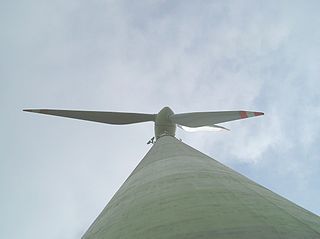 My wife and I had dinner last night with fine friends, a married couple who never disappoint us with their conversation; they’re both extremely well-rounded and intelligent people who care deeply about the plight of their fellow travelers here on 21st Century Earth. But sure enough, the guy brought up a topic that I recalled from a previous conversation: wind turbines are ugly.


