
Aiming at Fairness

 I have a great deal of respect for PBS, but in many ways they’re no better than CBS’s 60 Minutes – whose every story is about one thing: convincing us of something. Pick an item – normally an emotionally explosive one – and then gather, twist, and force-feed every piece of evidence possible to convince us of whatever the editor has decided that we must believe.
A recent episode of the PBS program SoCal featured California’s poor, neglected Occupational Safety and Health Administration — OSHA, and documented that a few companies in Southern California had been neglectful of some of their workers. For 30 minutes, viewers had one idea rammed down their throats: government needs to have more power to investigate companies’ facilities, business practices, and records — and to impose harsher fines for safety violations.
I think pretty-much everyone accepts that cases of corporate malfeasance happen every day. But mightn’t viewers here have been interested in a voice from another point of view – even if it lasted on the screen only a few brief seconds? Instead, we received a half-hour drumbeat: business owners are selfish monsters, and only more intrusion of government into the private sector can protect us from their callous disregard for our safety.
It might have been instructive to examine — if only for a moment — the mass exodus of business from California, much of the cause of the $42 billion state budget deficit, and the crash of real estate values as millions of workers are laid off from companies that are failing — or pulling up roots and going to more business-friendly parts of the country. Can’t we hear even a suggestion that the world of hurt in which we live may be due to too much government intrusion, in the form of onerous taxation and regulation?
I was amused to learn that SoCal received an award for its journalistic excellence. If PBS wants to know what would have represented even greater excellence, it would have been a bit of fairness, e.g., a tiny bit of the other side of the argument.
When I think of what 2GreenEnergy represents, I think of that fairness. We all want clean energy, but we acknowledge that we live in a world of tough realities. Outside of the shareholders in the fossil fuel companies, no one wants oil, coal, and gas. But, unfortunately, the world is just a wee bit more complicated than simply shutting off the pumps.
Let’s advocate for renewables, but let’s push even harder for a fair and level-headed discussion.

 Governments are throwing billions at smart-grid development. Industry giants from IT, transportation, and communications are jockeying to dominate what will be a complete transformation of electric utilities.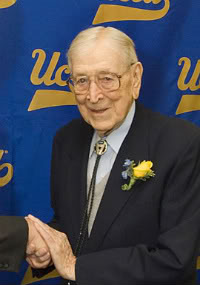
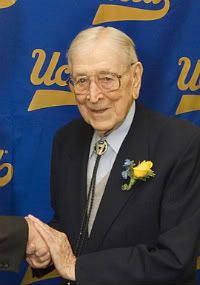 I’d be remiss if I didn’t note with sadness the passing of John Wooden. Coach Wooden will stand forever as a personification of strength of character and integrity, and his examples will never be forgotten.
 “Fun and frivolity are usually the first casualties of a recession, and so are the vehicles that let the good times roll,” says Lawrence Ulrich of MSN Autos. “Buyers, all buyers, have become much more practical,” said Jeff Schuster, an industry forecaster for JD Powers and Associates. “They look at cars like these and say, ‘I just can’t swing that right now.'” Consequently, the sporty side of the luxury car market is in a sales free fall.
 Like hydrogen as a fuel, liquid ammonia is a carrier of energy, as opposed to a source of energy. When we create ammonia out of nitrogen and hydrogen, we add energy to form a compound that can later be broken down, releasing some of that energy for useful purposes at a time and place of our choosing.


