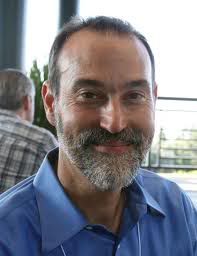
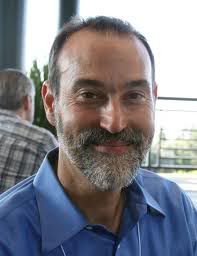
PhotobucketI want to make sure my book on renewables contains a robust chapter on the moral standards to which we need to hold our corporates; I’ve tentatively named this section “Corporate America – Managing Both Profits and Ethics.” I’m delighted to report that the Josephson Institute for Ethics will be granting me an interview on which I will base my writing. With their hugely influential “Character Counts” program, the Institute has been successful in changing the ethical thinking and behavior of literally millions of people — both children and adults — all over the world; it’s certainly had a profound effect on me personally.

At stake here, of course, is the imperative for our corporations to behave decently, respecting the rights of those of us who are affected directly or indirectly by their decisions and actions. But why is such an institute needed? Isn’t it precisely clear what’s right and wrong? I’m afraid the answer is no.

I don’t believe we need an ethicist to comment on behavior like Beechnut’s selling apple juice that contained 0% apples (only chemicals and water). But many of the decisions faced in the modern business world are not so cut and dried. What should we make of businesses whose products are harmful to society, like fast food? Should that judgement be mitigated if such companies sustain considerable philanthropic efforts elsewhere? Perhaps more to the point, what about oil companies that covertly but aggressively divert our focus on dealing with global warming? What about those that abide by our well-enforced environmental laws in the US, but commit atrocities outside our borders in the (I hope mistaken) belief that they can get away with it?

I hope readers will enjoy this chapter – and, in the meanwhile, visit the Josephson site and learn more about the incredible work these people are performing on a daily basis.

Tagged with: , , ,

PhotobucketGiven the realities of our time, most of us are short-term focused – even those in renewable energy R&D. We tend to want to know what can we do NOW to lower our carbon footprint and lessen our dependence on foreign oil. I’m not saying that this thinking is flawed, but occasionally I like to ask questions that attempt to get at the long-term answers as well.

To that end, in preparing my book on renewables, I’ve conducted a few interviews with extremely senior physicists, and asked questions about the theories and experiments in the lab right now that may change the may we power our world 100 years hence.

One such interview was yesterday’s, featuring Martin Perl, Nobel Laureate in particle physics – a man so brimming with warmth and kindness (not to mention overwhelming intelligence) that I really hated to leave when the interview was over. We sat just a few feet from the Stanford Linear Particle Accelerator — a device that speeds up particles – normally electrons – to velocities just under the speed of light – and then subjects them to various conditions, e.g., strong magnetic fields. Suffice it to say that wild things happen under those conditions.

The reason I traveled those 300+ round-trip miles was my belief that:

  1. the point of cutting-edge physics is to understand the ultimate building blocks of the universe,
  2. depending on whom you believe, we as a civilization are somewhat close to achieving that understanding, and
  3. with that understanding will come (somehow) an endless supply of clean energy

But surprise! Dr. Perl’s beliefs are 180 degrees opposed to these points. Summarizing an hour-long conversation, one that was both fascinating and disappointing at the same time, he believes that we’re nowhere close to understanding those building blocks and mechanics of the universe, and, even if we were, there is no indication that clean, useful, and inexpensive energy would ever come as a result. (Having said that, there are some extremely powerful implications of Dr. Perl’s work that will be a true boon to mankind in other areas, e.g., medical science.)

So what’s the take-away from all this for us fans of renewables? I suppose it’s this: If you believe Dr. Perl – and it’s hard not to given his credentials – we’ll have to look elsewhere for a long-term answer to our energy challenge. In a way, I suppose, that ratchets up the pressure to find answers using today’s technology that work within the confines of the law of conservation of energy as we know it. And is that impossible, when the sun bestows 6000 times more energy each day on the earth that all 6.8 billion of us consume? Hardly.

Tagged with: , , , ,

Photobucket
Honda’s Steve Ellis is one of the world’s foremost authorities on the subject of alternative fuel vehicles and their commercial trajectory.  He happened to be a fellow speaker at last month’s AltCarExpo in Santa Monica, and I’m proud to count him among my friends.  We’ve have had several meetings over the past year or so, from which I’ve learned how much more there is to the subject of fuel cells than most people realize.  In an interview last night, Steve reviewed the subject with me from top to bottom, forming the basis of an important chapter in my book on renewables.

While they were fresh in my mind, I thought I’d note a few of the most interesting highlights from Steve’s presentation:

  • Of those who know anything at all about fuel cells, most have opinions that are based on sources that have made essentially no effort to treat the subject fairly. 
  • It is true that the process by which hydrogen (the “fuel”) is electrolyzed from water and then, in the car, recombined with oxygen to form water is less efficient that the process of storing electrical energy in a battery and converting it to kinetic energy in an electric motor.  However, this is largely missing the point; there are far more important factors that affect fuel cells’ utility in transportation that are normally overlooked.
  • Both types of electric vehicles (fuel cell and battery) offer the potential for completely clean transportation; the issue is how the energy is generated in the first place.
  • Over the past few years, the efficiency of fuel cells has improved faster than the relevant statistics (energy density and cost) of batteries.   
  • Technologies by which drivers can refuel their cars for longer trips will bedevil the battery electric vehicle market for the foreseeable future.  Better Place is not a good fit for the US, and ubiquitous quick-charging is many decades away, if it ever comes at all.  So if you want clean vehicles that can be refueled in a matter of a few minutes (versus many hours), hydrogen is your only answer.

I guess the most memorable moment of the interview was the concept of personal emotion and politics.  Steve is at a loss to understand why people with a sincere devotion to environmental stewardship would manipulate the facts to denegrate a technology that is strategic to moving us in the right direction.  “This is truly strange behavior. Fuel cell advocates don’t try to derail the battery industry.  It’s obvious that both have strengths and weaknesses, and form complementary paths in our journey to clean transportation.”

I guess we’d all like to think that meeting the challenges of reducing our carbon footprint are purely technological, rather than political.  Or — if the challenges in fact do have political components that it’s “the good guys against the bad guys” — and that there is a kind of “brotherly love” among the fans of renewable energy and electric transportation.  But my recent interviews have suggested that this is not the case.  All I can say is what I remind my kids of constantly:  This is not going to be easy.  Let’s not fight among ourselves and make it impossible.  

Tagged with: , ,

Recently, I spoke with Ben Beach, Senior Editor at the Wilderness Society. I reached out to Ben because I wanted to see how the organization was dealing with issue that public land (I presume some of it “wilderness”) is a good candidate for the generation of renewable energy, the form of solar thermal, wind farms, etc.

Ben pointed out that there are four categories of public land. 

National Forests
National Parks
Wildlife Refuges
Other land managed by the Bureau of Land Management

I’ve included links so readers can learn a bit more about each type.  The first of these is managed by the US Department of Agriculture; the others are handled by the Department of the Interior.

The Wilderness Society advocates for a rational balance of public land management, in which there are some areas (currently about 109 million acres) of true wilderness, not susceptible to any development (i.e., no roads providing access).  Ben’s point is that if you (as a camper, say) want to access otherwise pristine land by road, you have Yosemite, and the other national parks.

I must say that this seems fair to me in principle.  Of course, the devil is in the details; we can only hope that the forces of reason are working towards dealing with all this fairly.  In particular, as we’ve all noticed, when we fly across the country, we see that there are hundreds of times more land than we need to generate enough electricity for the entire continent.   If we can reduce and ultimately eliminate the consumption of fossil fuels by using some of that land — even if such use comes at a certain ecological costs, I think it’s obvious to everyone that this a deal worth making.

Tagged with: , , , , , , , , , , ,

PhotobucketThis Wednesday, November 11, I’m driving up to Palo Alto to conduct a few interviews for two different book projects, one of which is my piece on renewables.

My first interview will be conducted at the Stanford Linear Accelerator Center with Dr. Martin Perl, the 1995 Nobel Laureate in Physics, bestowed for his discovery of the tau lepton in 1975. I’ve written out a few questions to keep this on track, which I present here. Notice the question on renewables; it will be interesting to see how he responds.

1) Do developments in particle physics tend to make people more religious as the amazing complication of the universe becomes clearer? Or less religious, as we get closer to unraveling mysteries that were previously though insolvable? I would think I good argument could be made either way.

2) A little over 100 years ago, right before the development of relativity and quantum mechanics, physicists – at least some of them – thought we were right around the corner from having the universe completely understood. Where do you think we are today? Is there hope for a Theory of Everything? (If yes) What do you think it will most probably look like?

3) A number of people hope that with a complete understanding of the universe will come an unlimited supply of renewable energy. I’m sure you’re often asked about the implications of cutting-edge physics in that arena. How do you respond?

4) You may be aware that there are a growing number of people (and I’m one of them) who see an increasing connection between physics and philosophy. For example, at the quantum level, we find things like consciousness affecting the external “real” world. You may have come across the movie “What the Bleep Do We Know?” a few years ago that presented this idea. What do you think about this?

5) What are you working on now? Why have you chosen this endeavor? What’s the most important thing you’d like to accomplish in the rest of your life?

Tagged with: ,

My old friend Peter Buzzard writes:

The current technology of Wind and Solar tends to provide power when and where it is needed the least. The transmission of power from wind and solar farms to population centers is extremely expensive, and superconducting transmission lines are still a future dream, so the answer lies elsewhere…

Thanks, Peter. I appreciate your comments, but I respectfully disagree. I favor the build-out of the grid with high voltage DC to conduct power from solar thermal farms with molten salt energy storage in the southwestern desert to the east and west coasts. While you are correct that this will not be inexpensive, in my estimation, it’s a program we should embrace immediately. When the total cost of burning fossil fuels is considered (including national security, healthcare, long-term environmental damage, etc.) it’s the deal of the century. And it carries with it the considerable benefit of putting people to work on a project that will solve one of mankind’s thorniest problems now and forever.

Solar thermal is safe, scaleable, reliable, affordable, environmentally sensible, and easily protected from attack, as it can be distributed across the vastness of the desert (criteria all of which need to be met before we can take any renewables technology seriously).

So what about wind, geothermal, and hydrokinetics? I think they all hold considerable promise, though I can’t see how they can compete effectively with solar thermal when all the considerations named above are fully thought through.

Tagged with: , , , , , , , , , , , , ,

I’d like to call readers’ attention to a really important discussion occuring in the comments under the post re: the Business of Plugging. I encourage even more opinions on the subject here; please feel free to join in.

Tagged with: , , ,

For my book on renewables, I just interviewed Brian Rutledge of the Audubon Society in Wyoming. I knew this would be an interesting talk, and I wasn’t disappointed.

I spoke with Brian because I wanted to get a sense for one of renewable energy’s most ironic truths:  renewables (in this case, wind energy) can run afoul of environmentalists. This subject will occupy an entire chapter of the book, but I’d like to try to abbreviate this interview into a few sentences.

In essence, I’ve come to understand from Brian and others that that there is very little similarity between what well-intentioned people would do to alleviate the energy crisis and what is actually happening in the real world — and sadly, this extends into renewables as well as oil, gas and coal. Big private money and big public power have come together to make an insane asylum out of the US energy policy.

The Energy Act of 2005 gave the Bush administration the power to ignore the reports of the nation’s most senior biologists and order drilling wherever it wished. More recently, the stimulus packages calls for those awarded grants to begin work more-less immediately, leaving no time for deliberation that would protect endangered species from the concrete and steel that are fragmenting and otherwise ruining their habitat. Instead of studying the problem and developing solutions that are in everyone’s best interests, the government is rushing to throw money at renewable energy solutions as fast as it can print it, and making a huge mess in the process.

Wyoming is highly prized for its windy plains, but wind power companies are not forced to follow the same Surface Mining Control and Reclamation Act (SMCRA) guidelines as the fossil fuel people, and can thus do essentially as they please.

“I’m a big proponent of renewable energy, but it’s like anything else: it can be done thoughtfully and deliberately, or it can be rushed and done wrong.  Unformately, what’s happened here in Wyoming is the latter,” Brian laments.  He seems like a tough but sophisticated cowboy — one who understands the true issues and is willing to fight hard for what he believes; I can hear the tenacity in his voice.  But he knows this won’t be easy.  “These wind people are like the gas people — on steroids,” he tells me.

“Are they really worse, or is it just that you were expecting better?” I queried.

“Maybe it’s that,” Brain allowed. “I guess I was expecting better.”

Tagged with: , , , , , , , , , , , ,

I quoted Lou Schwartz of China Strategies in an earlier post on wind power, and I found what he said so fascinating that I placed a call to him just now to ask him more about his overall take on China generally. In particular, I asked about American perceptions of China: What are they? What should they be?

He said that conversations with Americans about China — even with extremely well educated people — usually gravitate quickly to everything that’s wrong with the country: foreign exchange, trade deficits, pollution. There is very little sense for what the Chinese call “shuang ying” or “dual win” (“win-win” as we might put it).

When I asked for a good example, Lou pointed to the very article that I posted earlier on the $1.5 billion Texas wind project. Senator (Charles E. “Chuck”) Shumer (D-NY) says he’s going to try to block this project, because it’s partially funded with stimulus money. “It hurts to hear that,” Lou said. “China is spending huge amounts of money on renewable energy, ultimately more than the US, and will be embarking on enormous projects for environmental remediation that will use money and expertise from companies all over the globe. If we can embrace this spirit of shuang ying, there will be huge opportunities for American companies. Shortsighted thinking like this hurts everyone – including our own interests.

I’m looking forward to working with Lou as a 2GreenEnergy associate. I constantly come across the need for answers about the realities of doing business in China, and I’m thrilled to have found this resource.

Tagged with: , , , , , , , , , , ,

I deeply appreciate the growing rush of informed comments on the 2GreenEnergy blog. Frequent guest Arlene Allen (whom I had the pleasure to meet recently) writes:

Normally, I would do my best to add something positive to the discussion. Quite frankly, I feel that the transportation industry in the USA is already positioning itself to inflate consumer expectation and subsequently slam them into the embankment as hard as is possible.

Thanks, Arlene. Sometimes I read things that cause me to agree with you 100%. I know I’ve been hugely pessimistic – even cynical – about the direction that renewable energy and electric transportation is going. But strangely, I have a good feeling about this overall. And it’s not because of positive intention and honesty of our corporate and government leaders, but rather the strength of the business case. The cost of all this is crashing like a stone, and, fortunately for mankind, I don’t see that anyone can do anything about that.

I’m looking at dozens of business plans, some of which feature truly transformative technology. Yes, they need funding – and in some cases, huge amounts of it. But the numbers in some of these cases are so compelling that they will ultimately receive the capital they are requesting, enabling the generation of clean power at a fraction of the cost of energy that comes from dirty and/or dangerous sources. I know it’s too early to declare victory, but I’m feeling very good about the transportation and energy industries.

I’m under NDA on a lot of these, but look at technologies that are already on the streets, like solar thermal with molten salt energy storage. The lies that Big Energy are spreading include the notion that this may be nice, but solar is inappropriate for baseload power. This is simply not the case. My point is this: That lie has a finite shelf-life. It’s just a matter of time until the truth gets spread so broadly that the lies will evaporate like the morning fog here in valleys of Central California.

Tagged with: , , , , , , , , , ,