Brian Rutledge contributed to the book’s chapter called “Renewables and Environmental Stewardship – Thinking Through All the Implications.” His major point is that we want renewables, but they come at a cost – and part of that cost, ironically, is ecological. I.e., renewable energy has numerous obvious advantages over burning coal and other traditional power sources. Yet each of the various clean energy technologies is accompanied by a certain environmental impact, all of which need to be understood clearly.
NREL spokesperson George Douglas contibuted to the book’s chapter on the US federal governement’s laboratories. As one might expect, there are many non-profit organizations of different types that make important contributions to the quest for clean energy: government agencies, NGOs, trade associations, etc. The handful of such groups that have contributed to this book speak to the important work they are doing to develop key technologies and to adopt rational policy by which renewables can be moved forward in a concerted and responsible way.
The National Renewable Energy Laboratory, or NREL, is the only federal laboratory dedicated to the research, development, commercialization and deployment of renewable energy and energy efficiency technologies. I was delighted to speak with spokesperson George Douglas.
Professor V. Ramanathan of Scripps Institution of Oceanography contributed to the book’s chapter on global warming. “Ram” (as he likes to be called) is the man generally credited with the discovery of the phenomenon of global warming, correctly predicting in the early 1970s that there would be a measurable increase in the temperature of the Earth’s atmosphere by 1980. I was happy to make the 200-mile trek down to La Jolla to speak with Ram in his laboratory.
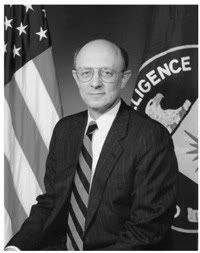
James Woolsey, the contributor to the chapter on Energy and National Security, has received a total of four presidential appointments – under both Republican and Democratic administrations. Most notably, he was Director of the United States Central Intelligence Agency from February 5, 1993 until January 10, 1995.
Mr. Woolsey is among the most vocal and, in my view, most credible proponents of renewables, making arguments touching on national security, global climate change, and economics. He is featured in Thomas Friedman’s Discovery Channel documentary Addicted to Oil, and in the 2006 documentary film “Who Killed the Electric Car?” which addresses solutions to oil dependency through the development of electric transportation. I was elated when his assistant responded positively to my request for an interview.
I’ve known Dan Conine for a couple of years now, and he never ceases to amaze me with his insight as a political philosopher and social critic. Here, he writes:
We have got to….think about the general configuration of humanity. Psychological and physical borders need to disappear between states and nations as cooperative behavior becomes the norm.
Yes, this is true. That would be great. I’d love to see that happen — but I don’t. And I often wonder what causes the general tone of antagonism that so dominates our lives here on Earth.
There are probably a great number of issues here – of which here are two — neither of them likely to change anytime soon.
1) Man has a great number of animal instincts. In many ways, we’re a hybrid life form: part jungle survivalist and part empathetic intellectual.
2) I believe the balance named above is manipulated by powerful, amoral people for their own benefit. I.e., we’re guided into hating each other. Note that for everything you hear that might motivate you to do something kind, you hear 100 things that generate fear and mistrust. That’s not a coincidence, my friend.
As always, thanks for writing in; it’s never a dull experience.
There needs to be a build-down of the sprawl simultaneously with the build-out of charging stations. Once they meet, the fringe will still have gas and the majority will be electric.
There are so many interesting scenarios here. Of course there are supply issues, i.e., Peak Oil. But one wonders what will happen if we see a steady erosion in the demand for oil. What will the oil companies do once demand for gasoline drops below a certain point? (more…)
Next week finds us in Virginia, Pennsylvania, New Jersey, and New York – pursuing deals with a few companies with hot ideas in the renewable energy and sustainability space.
The bad ideas I receive seem to keep getting worse. Someone sent me an idea this morning that was the energy equivalent of a miracle weight-loss product that, when taken with a drastic reduction in calories and vigorous exercise, guarantees to take those pounds off.
But the good ideas somehow keep getting better. My trip to New York is primarily to meet a team of people who import paper made of sugar cane waste – a 100% replacement for paper made from trees. They have a rock-solid source, and can sell it at the identical price of competitors’ products that come at the environmental expense of deforestation. I want to be a part of this — in a big way.
I just put a piece on Renewable Energy World regarding the History Channel’s coverage of energy. As usual, last night’s show was very well-produced; it must cost a fortune to get all that in place with the wonderful special effects and clips from exotic parts of the world. But I was bitterly disappointed that the show skirted the opportunity to cover renewables — and contained outrageous errors in the coverage it provided. (more…)
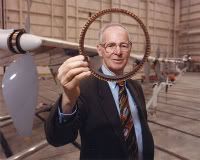
AeroVironment is one of my favorite companies. Founded about 40 years ago by the late Dr. Paul MacCready, AV still shines on brightly with its many powerful innovations in electronics and flight. Most notably, these people are quite successful; they seem to be on the right side of almost every business decision.
The deal they inked this January to supply the chargers for the Nissan LEAF is a great example. As Kristen Helsel, AV’s Director of EV Solutions told me yesterday during an interview at the 2010 Plug-In show in San Jose, this is a truly major deal for them.
As I’ve mentioned in “Tough Realities” report, to me, the AV approach to charging (just making charging quick, easy, and ubiquitous as possible, growing the infrastructure as the EV base grows) is 100 times more sound than battery swapping, as supported by Better Place. In fact, later in the afternoon, I listened to the battery swap pitch from Jason Wolf, Better Place’s vice president of North America. He’s a very articulate spokesperson for the concept, and as compelling as anyone can be. But it’s just not an appropriate solution for the United States — a landmass of 3.5 million square miles.
Wolf told us that “If EVs are going to enjoy mass adoption, we need to replace not just the car, but the system by which people drive them.” It’s hard to argue against it that, but the real question is this: how exactly will that be achieved? I’m betting on a steady build out of the charging infrastructure – eventually deploying ubiquitous fast-charging. And I’m betting on AV to be there to make that happen.
Bill Gates and GE Chair Jeff Immelt at AEIC press conference, courtesy AEIC
A group of top business leaders are working together and formed The American Energy Innovation Council (AEIC) in a call for action on renewable energy. They are emphasizing the need to correct the “deficient” American energy system. The Council states that we: need a call for investment, need reforms to create jobs, need to address environmental issues and need to address national security. They have been meeting with the White House and Congressional leaders. Their report is entitled “A Business Plan for America’s Energy Future” and states that reform and strengthening of U.S. investment in innovation is a most critical element to securing our future. (more…)


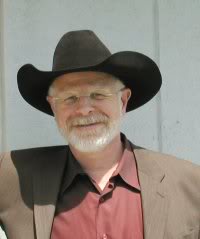
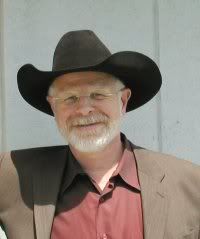 Brian Rutledge contributed to the book’s chapter called “Renewables and Environmental Stewardship – Thinking Through All the Implications.” His major point is that we want renewables, but they come at a cost – and part of that cost, ironically, is ecological. I.e., renewable energy has numerous obvious advantages over burning coal and other traditional power sources. Yet each of the various clean energy technologies is accompanied by a certain environmental impact, all of which need to be understood clearly.
 NREL spokesperson George Douglas contibuted to the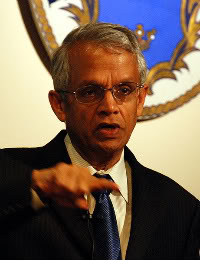
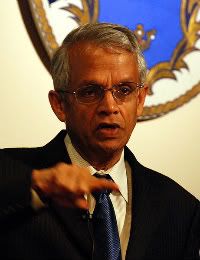 Professor V. Ramanathan of Scripps Institution of Oceanography contributed to the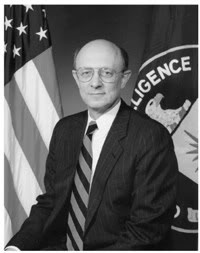
 James Woolsey, the
 I’ve known Dan Conine for a couple of years now, and he never ceases to amaze me with his insight as a political philosopher and social critic. Here, he writes:
 In response to my piece on
 Next week finds us in Virginia, Pennsylvania, New Jersey, and New York – pursuing deals with a few companies with hot ideas in the renewable energy and sustainability space.
 I just put a piece on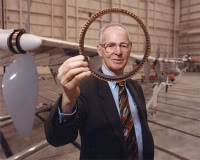
 AeroVironment is one of my favorite companies. Founded about 40 years ago by the late Dr. Paul MacCready, AV still shines on brightly with its many powerful innovations in electronics and flight. Most notably, these people are quite successful; they seem to be on the right side of almost every business decision.


