On a recent episode of the 2GreenEnergy Report, EMCycle CEO Michael Scholey explained to me why he believes the unique design of his company’s E-bike has features customers will really like. I have to agree; this is a terrific idea.
For better or worse, I’ve advertised my willingness to review business plans in the renewables and electric transportation space — and to provide a comment without cost or obbligation. This, as you can only imagine, as landed some pretty strange ideas in my inbox.
Having said that, I believe that EMCycle, with its great new Ebike design, holds fantastic appeal to investors. CEO Michael Scholey agrees, and explains why from his perspective.
According to the publication Energy Intelligence Finance, $150 billion per year is being spent globally on renewable power. That’s a stunning figure and it shows that, even with last year’s cap-and-trade capitulation in Washington, green energy is thriving. Of course, if you’re an American, you have to be concerned, because so much of that money is being spent OUTSIDE the U.S., and thus America is losing out on millions of permanent new jobs are being lost.
I always try to keep my fingers on the pulse of concentrating solar power as the clean energy technology that will get us through the next century. Right this minute, 10,836MW of CSP are under development, but only 423MW in operation or under construction. And since only 4% of proposed CSP projects are actually happening, it certainly raises questions about the other 96%. What delays are they encountering? What exactly happens during project development that delays – or, in some cases kills, these efforts?
It seems that this subject: how does one get a CSP project off the ground – is the core concept of a trade show, the CSP Project Development Conference & Expo, coming in Denver in October. The show claims to assemble external decision-makers, lobby groups and government organisations to discuss how to solve CSP development hurdles and increase their speed to market. I think I might check this one out.
Have you seen the book authors on the great talk shows who chat without a single flub or lag in response to any of hundreds of different questions? That’s the guy I aspire to be. I’m not there yet, but practice makes perfect. Yesterday, I taped two shows in which 2GreenEnergy business manager George Alger interviewed me for a local cable access program.
It reminded me how much easier it is asking than answering the questions. Having said there, I think there’s hope; I actually did fairly well in my estimation – and I’m bound to get better from here.
Interior Secretary Ken Salazar and 10 U.S. States recently announced the creation of the Atlantic Offshore Wind Energy Consortium, dedicated to promoting the development of wind energy on the Outer Continental Shelf (OCS).
Salazar said, “Appropriate development of the Outer Continental Shelf wind power will enhance regional and national energy security and create American jobs…” He added that the newly named Bureau of Ocean Energy Management (BOE) will oversee development of wind energy in the OCS. The states involved are Delaware, Maine, Maryland, Massachusetts, New Hampshire, New Jersey, New York, North Carolina, Rhode Island and Virginia.
Solar Power is Reinventing Toledo
Here’s the story of how Toledo is converting itself from a former Rust Belt city to a modern solar-energy hub has been led by a partnership of business, government and academia. (more…)
Here’s a good discussion of target marketing. What’s the difference between designing a new product because it’s cool versus meeting the true unmet needs of a specific market segment? Michael Scholey, EMCycle’s CEO, and I talk about this.
When we talk about a “level playing field” for renewables, we mean that we simply hope for a day in which the incentives to generate energy from fossil fuels are removed and the energy industry and its customers must pay the full costs. We feel that more or less immediately, this will cause renewable energy to be perceived as a considerable bargain.
Here’s a short article on energy subsidies from Bloomberg, published just a few days ago, in which writer Alex Morales points out the fossil fuels receive 12 times the subsidies as clean energy. If we can somehow put a spear through this shameful and corrupt practice, we’ll be in good shape.
Renewable energy legend Bill Paul has recently agreed to write financial reports and newsletters for us at 2GreenEnergy. We’re delighted to have come across such good fortune, as there really is no one more qualified for the task. Bill retired from the Wall Street Journal after a 20-year stint as a staff writer covering the energy sector, and gave a great interview of the book’s chapter on business and finance.
According to Bill:
Energy is at the crux of all things financial. There is not a single business that does not have energy as a significant cost factor, there is not a single country that does not have energy as a significant national security factor, and there is not a single household that does not have energy as an important budgetary factor. With energy, you are operating on all levels in terms of finance, as well as national security, as well as health consequences. You have privacy issues, property rights issues, basically any personal choice issue on lifestyle and you have a perfect storm of political, economic, and social interests — all competing for “the right” approach.
Sustainable Business started in 1996, as one of the first websites at the dawn of the Internet. At that time, the state of the industry was completely different than it is now; it was fairly small, fragmented community of people spread around the world that were interested in this. What was most useful about using the Internet at that time was its ability to find people all over the planet who were not connecting with each other and bringing them together.


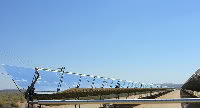
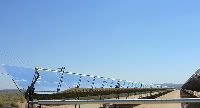 I always try to keep my fingers on the pulse of concentrating solar power as the clean energy technology that will get us through the next century. Right this minute, 10,836MW of CSP are under development, but only 423MW in operation or under construction. And since only 4% of proposed CSP projects are actually happening, it certainly raises questions about the other 96%. What delays are they encountering? What exactly happens during project development that delays – or, in some cases kills, these efforts?

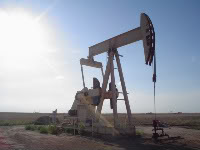
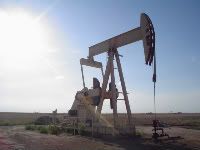 When we talk about a “level playing field” for renewables, we mean that we simply hope for a day in which the incentives to generate energy from fossil fuels are removed and the energy industry and its customers must pay the full costs. We feel that more or less immediately, this will cause renewable energy to be perceived as a considerable bargain.
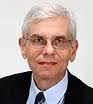
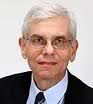 Renewable energy legend Bill Paul has recently agreed to write financial reports and newsletters for us at 2GreenEnergy. We’re delighted to have come across such good fortune, as there really is no one more qualified for the task. Bill retired from the Wall Street Journal after a 20-year stint as a staff writer covering the energy sector, and gave a great interview of the
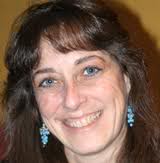
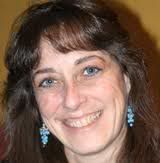 For 14 years, Rona Fried has worked hard to tell an important story: there are numerous, potentially


