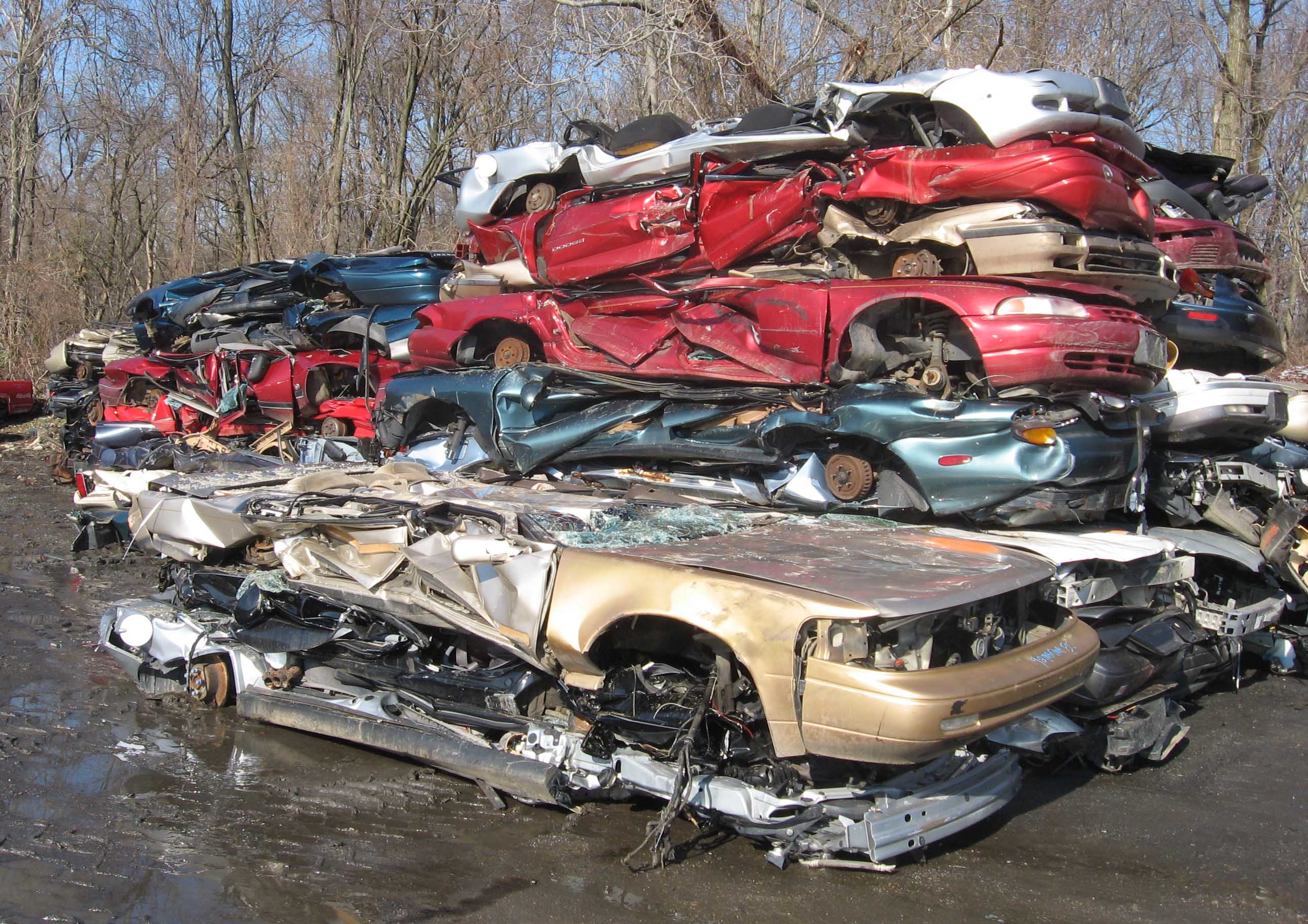
When fossil fuel costs suddenly shot through the roof a few decades back and continued to spiral upwards thereafter, it brought a new consciousness about the need to reduce dependency on the fast depleting fossil fuel reserves. The need for conservation was also given a boost with the growing realization that many of the problems faced by our planet were due to indiscriminate consumption of fossil fuels and the resultant pollution. The car industry all over the world has been putting in a lot of effort in the technology, design and manufacture of eco cars that are more efficient and reduce environment-damage. (more…)

Tagged with: , ,

My learned colleagues who advocate for advanced nuclear are quite passionate about what they’re doing, largely on the basis that the ever-growing CO2 levels in our atmosphere are causing climate disruption and ocean acidification.  While I doubt we’re as close to a “ready for prime time” implementation of, say, liquid fluoride thorium reactors as they do, I completely support them in principle.

Here’s the bad news:  their current plan is to approach Jim Inhofe’s (R-OK) staff, and set up a round of presentations on the subject. (more…)

Tagged with: , , , ,

Run-of-River Hydro Projects in Southern BrazilA friend of mine whose life’s work is analyzing the forces that shape the health of Brazil’s consumer economy sent me this short and quite bearish paper on the subject.

I respond:

Thanks; this is interesting.  However, from the standpoint of energy and the Brazilian economy, I would be thinking as follows:

• Hydroelectricity doesn’t really compete with the availability of potable water.  This is largely true of hydroelectric dams, and it’s even more clear in the case of run-of-river hydro, where a portion of a river’s water is redirected temporarily, and then allowed to rejoin the main flow almost immediately.

• The southern part of the country seems to have plenty of water, and that’s where almost all the energy demand is.

• Now, obviously, if the government is essentially anti-business and the entire economy is going to hell in a hand-basket, energy demand will fall, as will prices, providing a significant challenge to developers of energy generation projects.  However, many observers don’t seem convinced that this is truly the case.


Tagged with: , , , ,

Check This Guide to Solar PanelsIn the past few years, a lot of interest has grown regarding solar energy. This is the result of an increasing awareness about climate change and the consequent boom of renewable sources of energy. However, there is still a lot of people that are hesitant about investing in heat pumps, solar panels, or other domestic renewable sources of energy. (more…)

Tagged with: , , ,

Obama’s Energy Policy Could Be A Great Deal WorseWhen I wrote a piece a month or so back lamenting U.S. president Barack Obama’s “all of the above” energy strategy, senior energy analyst Glenn Doty commented that I need to keep things in perspective, that things could be a lot worse, and, in fact, that things will indeed soon be much worse if the midterm elections wind up packing the key environmental committees with climate change deniers and other anti-science whack-jobs (my words, not his).

In that vein, here’s a letter that appeared recently in a Canadian newspaper about the Obama presidency more generally.  Something to consider.


Tagged with: , , ,

Solar Energy Becoming Fabulously InexpensiveThe picture here may imply that pretty girls are necessary to sell solar PV, but journalist Bill Moyers vehemently disagrees.  On a recent episode of his popular show on PBS, Moyers presented evidence that the solar industry is booming—and for the very reason that I claim in my current book project (“Bullish on Renewable Energy – Eleven Reasons Why Clean Energy Investors Can’t Lose“) namely, that it’s become fabulously inexpensive.

The bottom line here is that the fossil fuel industry has, in effect, lost the battle. The exact time of its demise can be debated, but it’s certainly far closer than most people imagine. The issue, of course, is the concept of the “Tipping Point” that author Malcolm Gladwell popularized in his 2007 best-seller of that title.  As you look through the graphics in the article linked above, try to imagine the scale we’re talking about here: enormous volumes of manufacturing capacity that are growing at a compound annual growth rate of 66%.


Tagged with: , , , ,

Yes, Global Warming Is Real, But Where Is the Heat Going?Much has been written about the potential causes in the slowdown of the warming of the Earth’s atmosphere.  Climate scientists are quite confident in the validity of the greenhouse effect, but they’re still trying to account for all the heat that the Earth is retaining, and they have a few different ideas as to where it’s all going.

There seem to be two main theories: a) it’s going into melting part of the enormous volume of Arctic ice, and b) it’s warming the oceans.  Here’s an article/graphic on the latter concept that I received earlier today from an extremely senior scientist in this arena, Dr. Alexander Cannara.


Tagged with: , , ,

Unlike Solar PV, A Concentrated Solar Power Plant is a Real Edifice I laughed out loud when I read Glenn Doty’s comment on my piece in which I mentioned the levelized cost of energy of both solar PV and CSP. After an analysis of some of the engineering details, he writes:

I think I like CSP because there’s a sense of stately power to it… It’s an obelisk – an ancient symbol of power shining brightly, the tip visible for a hundred miles. It’s a testament. We built something… It’s kind of the same feeling that I have about the Grand Coulee Dam (pictured), or the Empire State Building.

I found it funny for this to come from such a man of science—but he certainly has a good point to make here. I’m reminded of the conversations I had with solar historian John Perlin, in which he explained that there are people who are unimpressed with PV because it lacks a certain masculinity: it doesn’t feature molten metal, crunching gears or pounding pistons. It just sits there; it doesn’t even get hot!

Tagged with: , , ,

World’s First Solar Road

Here’s a topic that’s gotten a fair amount of play over the years: solar (PV) roads.  Finally, the first such thoroughfare is open to the public—in the Netherlands: land of tulips, windmills, and yes, if you get far enough off the beaten track over there, you will find people wearing wooden shoes.

As I’ve mentioned before, I can’t imagine that this represents a cost-effective way to lay down PV.  Even the number one thing to like here, i.e., land use, isn’t really the bonanza that it seems, due to shadows.  A shadow the size of a pack of matches on a 15-square-foot panel will knock over one-third of its power out.

I have a feeling this is of symbolic value only.


Tagged with: , ,

Can Solar Thermal Compete in the Pantheon of Renewable Energy “Flavors?”I took a nice hike with a friend last weekend, during which we had lots of time to talk about the important issues of the day; we’re out there long enough that there is no reason to rush from one topic to the next.  This was good news for our discussion from the various flavors of renewable energy and each of them is coming along.

My friend is an advocate of solar thermal (aka, concentrated solar power/CSP).  My personal concern is that its levelized cost of energy cannot approach that of solar PV and wind, and that, therefore, it may be doomed to obscurity.

Not everyone sees it that way, however.  Here’s good news from the people running the huge (377 MW) Ivanpah facility in Eastern California.


Tagged with: , , , , ,