
On Sunday afternoons, I like to take a decent hike, say 7 or 8 miles, and wind up at a nice place where I can get a beer, shake a few hands, and discuss what’s going on in the world.  Today was a banner day for this enterprise, as there were several groups at my destination (The Los Olivos Café, pictured here) with whom I had stimulating talks.

One guy was an industrial plastics salesman; this didn’t seem to hold much promise until I learned that one of his key accounts is the FPL (Florida Power and Light) solar thermal project here in California.  He sells the piping, connectors, and a whole bunch of other stuff to one of the most exciting renewable energy projects in the region.



Tagged with: , ,

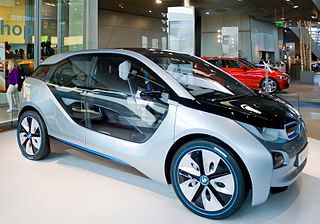
Longtime 2GreenEnergy supporter and EV enthusiast Fritz Maffry just sent me this piece on BMW’s entrance into the electric vehicle space — a process that has been slow and measured, but perhaps, in the end, one that will prove to be the best approach overall – an example of “slow and steady wins the race.”  Certainly their Mini-E (whose drive train was built by my friends at nearby AC Propulsion) was a considerable success – a true delight for their customers, and an experience from which BMW learned a great deal; in fact, it formed the platform on which their current entrant, the i3, would be developed.  I urge readers to take a long look at today’s i3: a blend of art, style, superior auto engineering, and perhaps most prominent of all, an incredibly advanced implementation of IT and communications technology.

But as one would have expected from any respectable German company, there is nothing too radical here; in particular, there is no attempt to redefine transportation as we know it.  Having said that, one could argue that BMW has begun to embrace the splitting of the auto world into “urban commuter vehicles” vs. the larger, heavier, ultra-luxury vehicles that the company hopes will continue to be prominent in country club parking lots for a very long time to come.

Tagged with: , , ,

Here’s a renewable energy idea that frequent commenter Tim Kingston sent me.  It doesn’t seem reasonable, but I thought I’d ask the physicists out there to comment.  It’s a device that emits tiny droplets of water from electrical conductors (copper pipes with thousands of tiny holes?) that are placed in the wind.  The droplets pick up electrical charge, and, when they’re blown away, cause the conductor to take on the opposite charge. 

There is nothing theoretically impossible about this, and I love the concept that it doesn’t have moving parts that wear out.  But the electrical field that is created (and thus the electrical energy that can be derived from it) comes from the kinetic energy of the wind.  You’re not going to get more energy out of this than the theoretical maximum (as prescribed by Betz’ Law) regardless of what device you insert into the path of the wind.  Am I not right?  And how much of that total energy can be converted into blowing droplets off their pipes?   I would think it would be a minute fraction.  What am I missing?


Tagged with: , , , , , ,

One of the risks of writing pieces in the tone of my recent article on the fantastic levels of mean-spiritedness and lethargy in the U.S. Congress is the tendency to depress people.  Though my intention is to spur readers into action, I occasionally have the opposite effect. 

I’m reminded of Emerson: “Nothing great was ever achieved without enthusiasm.”

Here’s a note I just wrote in response to a fairly glum email I received in response to that post:

Thanks very much for taking the time to write.  You make some excellent points here.  I think the bottom line is hoping that Washington will clean up its act is foolish.  That, however, doesn’t mean a sensible approach to energy won’t happen.  Hometown America really gets this, and many of the largest corporate entities are doing fabulous work. 

In the meanwhile, I urge you to remain active and not lose your enthusiasm for turning this around. 

Tagged with: , , ,

The main obstacle facing cleantech generally is that it tends to be more expensive than what it’s replacing, but here’s an example of the opposite case.  2GreenEnergy associate Lindsay Oliver sent me this article on “green” bonds that are gaining favor in the market, and are used to fund the development of renewable energy projects.  They’re selling like hotcakes, precisely because investors love the value: the three-year, triple-A rated bonds, unwritten by Citigroup, J. P. Morgan and Morgan Stanley, currently yielding 15 basis points above the comparable U.S. government securities.

Tagged with: , , , , , , ,

Here’s something I thought readers would enjoy: a video about energy and transportation concepts of the future.  A friend sent me this a minute ago and asked for my comment, which is as follows:  there is nothing theoretically impossible about any of this, but none of the concepts has any practicality as far as I can see, and the figures quoted are enormously exaggerated. 

To be fair, I suppose I can see a day in the distant future where the first idea (extremely high-speed public transportation) could happen, though it’s hard to imagine how a society in our current condition could get to a point at which it could possibly afford such a system. 


Tagged with: ,

I want to thank the many people who have helped 2GreenEnergy along the way in our attempts to popularize the site.  Though we have a great deal further to go, we’ve come a long way, and I’m grateful for all the support we’ve received.

Looking back across all the ideas that have been submitted, I think the most savvy of them center around concepts for cutting-edge content, e.g., developing our own clean energy infographics, as this is a common way to do something so compelling that is goes absolutely bananas in the social media space.  In truth, we’ve never hit a homerun, though we’ve knocked out a few singles.

Speaking of infographics, here’s one I came across today in the energy space; it happens to be particularly offensive to the oil companies, as it “calls them out” for their attempts to hush up the 13 incidents in the last 30 days, in which a total of more than 1,185,000 gallons of crude oil, tar sands, and other fossil fuel waste were spilled.


Tagged with: , , , , ,

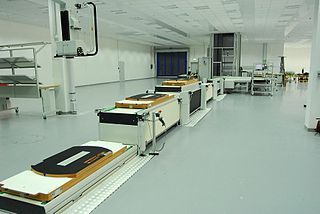
When people think of going green, they may not think of contract manufacturing, but they should! Contract manufacturing allows companies who want to design, engineer, and manufacture green products to do so without the added expense and resources of building their own production facilities. Using a contract engineering and manufacturing company allows green energy technology entrepreneurs to keep their costs down and focus on developing and perfecting their core technologies. This is a great option for not only early stage companies, but also mature green energy companies! Some contract manufacturing companies will also provide global field service to implement and support the products they help manufacture. (more…)

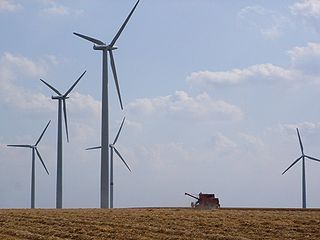
Confused about some of the facts on wind energy? Does it work as well as they say?

There are tremendous benefits for having wind energy, and here are some of the top facts on the productivity of it.

Number One in New Generating Capacity

In 2012, wind energy was the number one electricity-generating capacity source for the first time ever. It provided, all total, 42 percent of the new electricity-generating capacity for all sources. U.S. developers are installing nearly two turbines a week with the current rate of growth.

(more…)

Tagged with: , , ,

Maybe it’s a “guy-thing,” but I’ve always loved tree houses.  One of the first books I ever loved was Swiss Family Robinson – and not for the plot or the characters; I just enjoyed how the author totally transported me to safe, cozy charm of life many yards above the forest floor.  For those who share my passion, here’s a cool piece that the Sierra Club did on the world’s top tree houses, in the larger context of eco-tourism. 

But, as we all know, the Sierra Club takes on subjects that are not at all about making the reader feel good.  Here’s a fairly aggressive video, yet equally well-made, on our civilization’s consumption of oil and the direct it’s taking us.


Tagged with: , ,