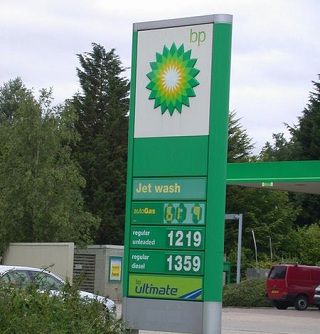
Here’s an article that illustrates what happens when regulators get clever in creating incentives for environmental stewardship and responsibility: smart people work around them, unintended consequences result, and windfall profits occur in random places that have nothing to do with environmental benefit.

If I were doing this, I’d make the whole situation incredibly simple.  How about this?

Remove all subsidies, and tax behavior that has currently uncaptured externalities.  Want to burn coal?  No problem.  But here’s a new price per kilowatt-hour that includes cleaning up the damage it’s doing to our lungs and environment.  I don’t think you’ll find it too appealing, but it’s your choice.

Gasoline’s cheap now too, but it sure won’t be when all its costs to society are included.

You’d have renewable energy in one hell of a hurry, and no unintended consequences from people gaming the system.
Tagged with: , , , , , , , , , , ,

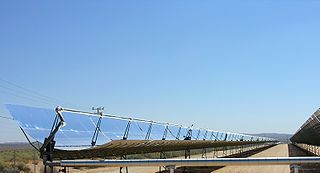
Here’s a short video that presents a shiny new CSP (concentrated solar power, aka solar thermal) plant in Abu Dhabi.

This 100 MW installation cost $600 million, not exactly cheap.  But CSP is a relatively new concept that hasn’t had the time to undergo the cost-reduction that comes from decades of R&D in the more mature technologies like solar PV and wind.

So what is remarkable about this?  Well, it uses air-cooling vs. water, which, considering that this plant (as well as most future CSP plants) is in the desert, this breakthrough is of incredible importance.

The other thing, of course, is that the UAE has oil coming out its ears.  So why clean energy?  If you believe them, and I don’t see any reason not to, it’s about climate change; they perceive a responsibility to lead the world away from fossil fuels and into renewables.

Perhaps there is a lesson to be learned here for the U.S.


Tagged with: , , , , , , , , , ,

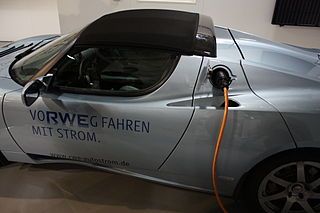
Here’s an article that presents some specious logic associated with electric vehicle adoption.  In particular, the greening of conventional vehicles militates away from, not towards, the adoption of EVs; the payback in fuel consumption for an EV is far more attractive when the car one’s replacing gets 25 MPG than 60 MPG.

Having said this, I do see a day when the case for electric transportation becomes overwhelming, both for the individual and for society.  Imagine, if you will, a time in which:

• EV range issues will have all but disappeared, i.e., ranges of 300 miles have been achieved at a reasonable cost.  Other costs have fallen as well, due to economies of scale and advancements in technology. (more…)

Tagged with: , , , , , , , , , , , , , , , , , , ,

It’s always interesting to see what people are doing around the world with respect to pushing the paradigm shift in transportation.  The concept of individual ownership of a 4000-pound car that is parked 23 hours a day, and has one occupant 75% of the hour it’s being used was something that made sense in the 20th Century, but is rapidly losing appeal to a generation of young people who have already shown their willingness to rethink the way they live. 

But how exactly do we cause drivers to reconsider their options vis-à-vis mobility?  What are the appropriate incentives to change course, as well as the disincentives to stay with our old habits?

Here’s something coming out of Holland, a freeway only for e-bikes and e-scooters

Tagged with: , , , ,

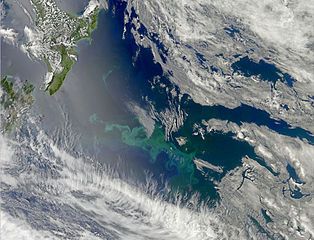
By no means am I able to keep up on every idea within the realm of geo-engineering, i.e., taking active steps at a planetary level to counteract global warming.  Here’s one that we hear about often, that apparently isn’t practical: “fertilizing” the oceans with minerals to change their chemistry and absorb more of the atmospheric carbon dioxide they receive

There are so many strategic issues with geo-engineering generally that it’s hard to know where to start.  Certainly we have to deal with unintended consequences, which, given the sheer magnitude of the problem and proposed solutions, could be horrific.  We also have the issue of governance.  Even if we come across a practical solution, who should administer it?

Normally, I advocate decisiveness and rapid response, but here’s an area in which I’m happy to see the world taking its time.

Tagged with: , , , , ,

Congratulations.  You have finally made it from the mailroom, to that position at the top of the business tree. If you want to spend your hard-earned wages on a brand new car then feel free. Sites such as Carsales always have good deals available. But you may be lucky enough to be eligible for a company car. What will you be offered as a choice? Many corporations are now caught in the embattled debate of the responsibility of going eco-friendly with their employee vehicle fleets. To offer electric model cars or not, that is the question pending now. Going green in the corporate world is more about the cost, profit and bottom line as much as it is about the benefits of improving the environment and reducing the carbon footprint of big companies. Today’s businesses need to see an improvement in profit as well as the environment. (more…)

Tagged with: , , , , , , , , , , , , , , , , , , ,

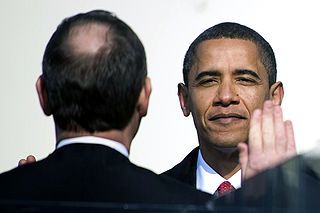
Just when I was starting to wonder if the subject of climate change would ever come up again in U.S. politics, President Obama makes a huge deal of it in his second inaugural address

This is a good thing, and I’d sure like to believe that it’s a serious harbinger of a world power that has come to take its responsibilities seriously.  I’d love to think that, in a short period of time, America will somehow transform itself from a laggard to a leader, and assert itself in the development of clean technology that is so obviously vital to our moral, economic, and national security interests. 

But a speech does not change reality.  To pick one of hundreds of potential sticking points:  60 of our 100 senators come from coal-producing states.  Do you know what they say when asked to develop an energy policy that reduces coal?  In the words of Ray Lane (managing partner of venture capital giant Kleiner Perkins, whom I interviewed for Is Renewable Really Doable?): 

They don’t say “no.”  They say “hell no.”

Again, I’d sure love to be a believer; I just wish there were a reason to hold out that hope. 

Tagged with: , , , , ,

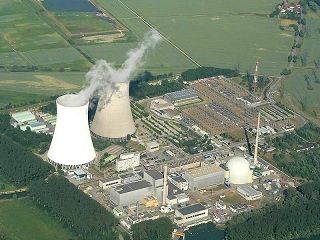
Thanks to frequent commenter Tim Kingston for sending me these two articles with which I begin the work week here at 2GreenEnergy.  First is a pro-nuke piece – certainly a concept that defies what I’ve come to believe, yet I try to keep an open mind.  I know there are people who say that nuclear is absolutely required if we’re to avoid both horrific economic collapse and catastrophic global climate change.  Again, I don’t believe this, based on the bulk of what I’ve read, but I don’t have a problem with discussing the notion.

The second is exactly in step with what I believe, i.e., that photovoltaics is a better “harvester” of solar energy than biofuels, because of the realities of the physics involved. 

Tagged with: , , , , , , ,

I come across several articles each day that cause me to adjust my position on where we’re going as a civilization.  Here’s one on BP, peak oil, and climate change that offers an interesting nuance, concluding with the following:
As author Naomi Klein outlines in an article written in the aftermath of Hurricane Sandy last fall, it has become necessary to challenge the business model that thinks destroying the earth’s climate in the name of profit is permissible.  “These companies have shown that they are willing to burn five times as much carbon as the most conservative estimates say is compatible with a livable planet,” Klein said. “We’ve done the math, and we simply can’t let them.”

I never thought of saying that the greed of the oil companies and their icy indifference to the health and safety of Earth’s inhabitants was “impermissible,” though that’s a heck of a good concept.  I guess we’re dealing with a shade of meaning here that draws the distinction between moral and legal permissibility.  I.e., a large and growing number of people agree with me and say that the oil companies’ behavior is morally unacceptable, and that, as a result of our efforts, this will translate to a day on which it becomes legally impermissible. 

Let’s hope that day comes soon.

Tagged with: , , , , ,

I just got off the phone with long-time environmental activist Rick Barnett, who, in 1974, started off on what was to become a career of public service in the truest sense: working to bring people together to make the world a better place.  As a real “student of the game,” Rick has made some very interesting observations, as well as recommendations for our society if we wish to take seriously the challenge of climate change, ocean acidification, the health-related effects of fossil fuels, etc.

Here are a few short presentations from Rick on:

An Opportunity for California’s Utilities

Testimony to US Senate Committee on Energy and Natural Resources

The Federal Housing Finance Agency and the PACE (Property Assessed Clean Energy) Underwriting Standards, and 

Climate-Friendly Retrofils


Tagged with: , , , , , , , , , ,