
Some Climate Change Deniers Have a Fabulous Command of the Language

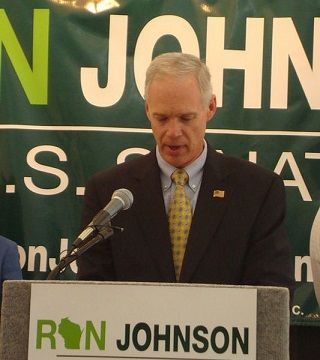 Here’s another good reason that I wouldn’t last 10 minutes in politics: I just don’t have the required facility with the language. Who can compete on the podium with Ron Johnson (R-WI), who accuses the groups associated with climate change mitigation of “Environmental Jihad?”
That’s some seriously clever stuff. Most people would have said his position, i.e., climate change denial, is the more radical and extreme view, given the 97% of climate scientists who concur that anthropogenic global warming is a real and potentially catastrophic threat to our civilization. Apparently, Johnson’s thinking is simple: Label the enemy the extremist, before they hit you with it, and come up with the scariest, most defamatory name you possibly can. Again, that’s crafty stuff — and it’s totally out of my league.

 As I mentioned when I posted this satirical piece on “
 The U.S solar industry keeps putt-putting along instead of moving full steam ahead. Why? The go-to answer is soft costs. But that doesn’t tell us much.
 It’s never too early to start teaching environmental awareness, and while preschools and nursery schools are teaching it, they can go green at the same time.
 Contrary to popular belief, the Philippines has four kinds of weather, namely: hot, very hot, rainy, and very rainy.
 I may have mentioned that I own some stock in
  Readers who may be wondering about the cost-competitiveness of renewable energy will be interested in this piece on the
  The driver of the taxi who took me from a meeting I had last week in Los Angeles to the Amtrak station hailed from Mogadishu, Somalia. I asked, as I normally do, “What’s it like there?” I love to get a sense for how people live in these exotic parts of the world. What’s important to them? Are people optimistic that the future will be better than the past? I was anxious to know, but insofar as Mogadishu has seen such violence, I was a little concerned about bringing up a sore subject.
  Here’s the latest project of a civil servant, Dana Rohrabacher, pictured here, whose education includes degrees in history and American studies. His life’s work at this point is his commitment to proving that


