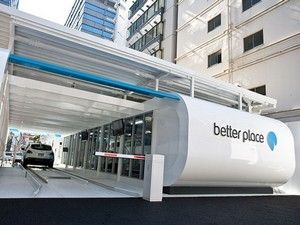
I was never a fan of the electric vehicle battery-swap concept “Project Better Place” for countries like the United States, with a sprawling landmass of 3.5 million square miles — in the “Lower 48” alone. But I’m surprised (and saddened, really) to learn that this isn’t catching on in Israel, a country that is understandably trying hard to rid itself of gasoline, and with a landmass  that is conducive to the solution.  Apparently, only 490 subscriptions to the service have been sold thus far in Israel, which has put  Better Place on the ropes financially.

According to the article linked above, the issue is our old friend, the consumer value proposition.  When you do the math (a subject in which Israelis traditionally excel, btw) buying an EV sans battery and signing up for a plan providing you with a certain number of miles per year doesn’t save you any money over gasoline. Many Israelis are saying they don’t want to be the sucker, the “freier,” as they say in Hebrew.  

I sympathize with this sentiment.  A car is a huge investment, and no one wants to purchase something that just never went anywhere.  There is a significant Catch-22 at stake here with consumer perception, where he/she says to the auto industry: “Make EVs a success; make them inexpensive and I’ll buy one.”  The automaker says, “Buy them, and they’ll BE a success.  Then we’ll make more — and the price will come down.”   

I’m surprised that the government doesn’t use a subsidy to make this hugely attractive, as Israel has an even greater imperative to stop buying gas from people who don’t like them than we do here in the U.S.  And if they’re looking for a place from which to draw the funds for the subsidy, perhaps they could consider the military budget, which is the size of all outdoors.

I’m rooting for Better Place to succeed there, and in other small countries where the logistics make sense.



Tagged with: , , , ,

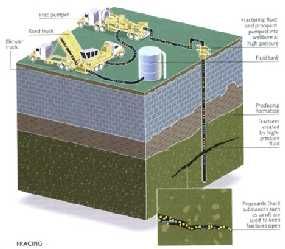
Those following the controversy around fracking may be interested in this piece, detailing a key decision at SUNY Buffalo.  Until yesterday, the Shale Resources and Society Institute (SRSI) was a part of the university, though many people made accusations to the effect that SRSI was a public relations front for the oil and gas industry to promote fracking under the guise of the scientific legitimacy that a university offers.

A letter from SUNY Buffalo President Satish K. Tripathi, who closed SRSI on Monday, said that the nail in the coffin was what some had called its “shill gas study,” the first paper the group published. All of the co-authors of this paper had direct ties to the oil and gas industry, as did four out of five of its peer reviewers.

Here’s a reminder that it’s never too late to stand up and do the right thing.  Good going, Dr. Tripathi. 

Tagged with: ,

When the Japanese began to contemplate the consequences of Fukushima, it became instantly clear that renewable energy would play an important role in their future.  And, as outlined in this article, Japan is running hard in this direction, simultaneously replacing 80 million electric meters with smart grid electronics, via their partnership with Washington State-based Itron.

Japan has shown the world how focused they can be, and how aggressively they can rise to prominence in industries like automotive and high-tech.  When they say they are shooting for 30% renewables by 2030, I’m certainly not betting against them. 

Tagged with: , , , , , , ,

Here’s a long and quite scholarly article a reader sent me from the Heritage Foundation, an ultra-conservative think-tank whose principal spokesperson appears to be Rush Limbaugh.  (I’m not sure that’s a good choice if they wish to be taken seriously by an intellectual audience, but they evidently don’t see it that way.)

While I disagree with the author’s conclusions, I thought I’d link to the piece insofar as it provides a breakdown of spending within the U.S. Department of Energy that I thought readers would find valuable; I certainly did.

Obviously, the author is entitled to his opinion that the DoE should not be investing in new energy technologies.  But he needs to consider that this is more than an ideological issue; it’s also a practical matter.  Such spending is absolutely required if the U.S. is to compete in the energy industry in the 21st Century, and join the rest of the world in going beyond its dependence on fossil fuels.  Having said that, if our country is content to fade into irrelevance in order to make the oil-rich even richer, he’s offering the perfect recipe.

You should know that The Heritage Foundation is funded by ExxonMobil, Chevron and the Koch Brothers, so you’ll need to come to your own conclusions.  Mine: their opinions on the subject aren’t too surprising.


Tagged with: , , , ,

Are you in the process of raising capital from investors? Cutting key deals with flagship customers? Forging relationships with strategic partners?

Now let me ask you this: how clear and compelling is your presentation? How well can you make a real connection to your audience and articulate your ideas?

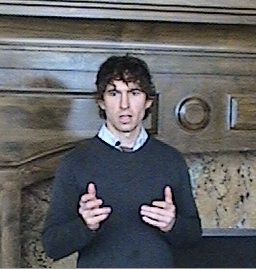
A 2GreenEnergy Associate and long-time personal friend, Lance Miller (pictured here) once told me, “Craig, you could have the best idea in the history of humankind, but if you can’t communicate it effectively, you might as well have never had it at all.”  That’s profound stuff.

But who exactly is Lance Miller? Only the former World Champion of Public Speaking, and arguably the most respected business speech coach on the face of the planet. Through his seminars, DVDs, online materials and one-on-one coaching sessions, Lance has helped tens of thousands of businesspeople develop and deliver compelling presentations of clarity, focus, and power. (more…)

Tagged with: ,

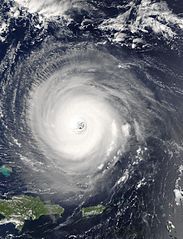
Reader David Stout sent me this excellent article on the intelligent rebuilding of the New Jersey and New York seaboards after Hurricane Sandy.  It contains a great number of terrific points about applying common sense in re-establishing housing, commercial buildings, and infrastructure in regions that are vulnerable to storms and violent weather events that are expected to become increasingly frequent and severe.  Yes, we need redundant emergency solutions, and the half-dozen other solid ideas the author proposed.

But what we really need is a way to avert the impending catastrophe of climate change.  We don’t live in 19th Century Holland when a city was saved by a little boy’s finger in a dike.  We live in a world where the Greenland ice sheet, 660 thousand square miles, about 20% the size of the continental United States, is melting.  Building sea-walls around Lower Manhattan in not an adequate answer to preventing the damage this world is about to incur if we can’t come together and construct a global solution here.

I’m not saying that it will be easy, but I am saying that it will be required.


Tagged with: , , ,

I coached several years of my children’s participation in soccer and basketball, including my son Jake’s soccer team five years ago when he was 14, one of the highlights of my life, as it connected me with so many fine people, and, at the end of the day, a really good cause. In particular, one of the kids on the team, Joel Blacker, comes from a devout Christian family that does a ton of humanitarian work in Haiti.  Here’s a video he made on the subject a few years ago. 
During this soccer season, Joel’s father Jez and I became fine friends; in fact, we went on to co-coach a few other soccer teams on which Jake and Joel both played.  Tonight, my wife Becky and I went out to watch his band play a concert (he’s a singer in a rock and roll band) — a fund raiser for their efforts. More on what this is about is available here.

Joel is “not just anyone,” btw.  Here’s a short piece I wrote on coaching that I hope you’ll enjoy; Joel’s the one mentioned at the end.   

Tagged with:

Here’s a lecture by Ozzie Zehner, whose popular book “Green Illusions” is making the rounds.  Indeed, there is a great deal of truth here.  In particular, we’re seduced by the sexiness of renewable energy, and in some cases make extremely illogical decisions to deploy it.

Zehner provides an example of a gentleman who cut down two deciduous trees that had wonderful passive solar effects (providing shade in the summer, but letting the sun pass through in the winter) because he was so in love with the concepts of having solar panels on his roof.  Ozzie showed with great ease that the net effect to the environment was fiercely negative.  There is no doubt that we dote over solar, wind, etc., at the expense of energy efficiency and conservation solutions that are, in some cases, hundreds of times more effective in environmental benefits.  And if you think this can be asinine at the personal/private level, try to imagine what happens at a governmental scale.   (more…)

Tagged with: , , , , , , , , , , , , , , ,

Actor Robert (“Bob”) Picardo graduated in 1971 from the William Penn Charter School in Philadelphia, two years ahead of me.  We all knew he was a creative genius at the time; he had a winsome manner, a brilliant mind, and a stage presence so powerful and refined that it seemed hard for us to believe we were watching a teenager up there. 

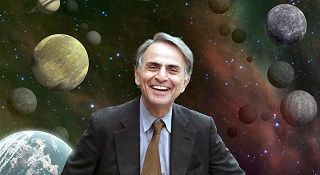
On the home page of his website is a video in which Bob reads Carl Sagan’s “Pale Blue Dot,” a short essay about our beloved planet and its place among the stars.  If you can watch this and not be moved, you’re made of stronger stuff than I. 

Tagged with:

When you open a can of soda or beer, do you like to bend the tab back and forth until it breaks off in your fingers?  That phenomenon, fatigue, plays a big factor in the design and maintenance of wind turbines.  The more torque placed on a blade causing it to deform from perfect perpendicularity to the rotor shaft, and the more often that torque is placed, the more hardware you need to keep the blades from breaking in the course of the turbine’s lifetime.  And of course, more hardware = more cost.

Those with some level of training in math and science may be interested in this graph, which shows at a glance what I really like about the unique design offered by my client, The Wind Turbine Company.  The area under each curve represents the total amount of deformation.  See how much smaller that area is for the orange curve versus the black?  That’s the reason that this turbine represents a significant capital cost reduction, and a corresponding reduction in the cost of wind-generated electricity of 30-35% compared with today’s industry leaders.


Tagged with: , ,