Here’s a webinar I conducted yesterday on Advanced Rail Energy Storage, or ARES, a new concept in cost-effective, grid-scale energy storage.  I interviewed ARES CEO Jim Kelly, and covered a range of issues spanning the physics and economics of energy storage, ancillary grid services, and the challenges facing those of us who advocate for the integration of massive amounts of renewable energy onto the grid.

(more…)

Tagged with: , , , , , , , , ,

I’m helping my daughter with her macroeconomics this semester, and really enjoying the moment for so many reasons.  I love spending the time with her, and the whole process of reviewing basic economics has been quite valuable to me as an observer of the energy industry.

We  just came across this quote from mid-20th Century economist Arthur Okun, in the chapter on supply-side fiscal policy:

High tax rates are followed by attempts of ingenious men to beat them as surely as snow is followed by little boys on sleds.  (more…)

Tagged with: , , ,

I try to check out the Smart Grid News every day, as I feel that improvements here are the true enablers of the things that will ultimately win the day in terms of clean energy.  Here’s an article on what Wal-mart is doing to cut itself entirely free of the grid by 2020

Did these people just come back from a Sierra Club meeting, at which they “got religion?”  I doubt it; in fact, they don’t even claim that themselves – and they can greenwash with the very best.  No, the issue is pure economics.  They can make or source 7 billion kWhs of renewable energy cheaper than they can buy it from the power utilities. 

Now that’s news, friends.  And it echoes what David Crane, CEO of NRG (Fortune-300, the nation’s largest power producer) said recently about his organization’s tenuous grasp on relevance.


Tagged with: , , , , ,

Many times the subject of power storage has come up on this forum. Today it becomes an issue for me personally again and this is an ongoing issue.

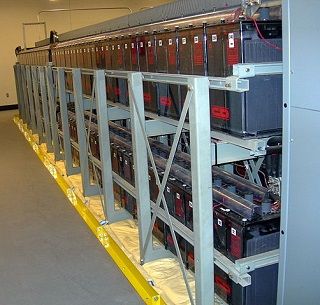
Not quite 3.5 years ago I purchased 4 deep cycle 12 volt 125 Amp hour (Ah) batteries for my little system to replace the ones I was using that had gone bad. That amounts to 500Ah of batteries for $400.00. These batteries are once again shot and I am in search of a replacement for flooded lead acid (FLA) batteries. With an expected life of 3-7 years at the very best these batteries are, in my humble opinion, completely unsuitable for the renewable energy industry. Also the recommended depth of discharge for a “long” life is 30% and preferable less meaning a 500Ah pack is really only good for about 166Ah. Add to that temperature considerations, max rate of charge and discharge and various other factors and the suitability goes downhill very fast. I am loath to go for FLA batteries again as they are unsuitable for renewable energy in so many ways, however, the alternatives are far more expensive in the short term. (more…)

Tagged with:

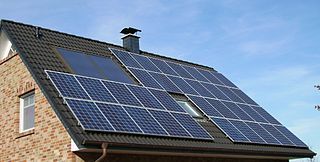
The resort and hotel business is extremely competitive and costly. As more and more hotels become increasingly extravagant, they require evermore energy to run. Many are switching to green renewable energies to cut costs and in theory they could eventually become self-sufficient, or even produce an energy surplus. The easiest way to start to do this is with the addition of solar power. (more…)

Tagged with: , , , , , , , , , , , , , , ,

It’s been several years since I interviewed Michael Scholey, CEO of Emcycle, on the 2GreenEnergy Video Report.  Since that time, I’ve come across an uncountable number of designs for small urban commuter vehicles, like this novel approach.  Personally, I’m still a fan of the Emcycle (see photos in the video linked above), with its fully enclosed compartment.

I’m reminded of a conversation I had with the designer of a kind of open-cab superized golf-cart that he proposed to sell in crowded urban environments, and I recall that the fellow was particularly excited about London.

“Not to be rude, but have you ever been to London?” I inquired casually.  “The reason I ask is that they get rain an average of 221 days per year; I mean, it’s the weather forecast for two out of every three days.  You may want to rethink this.”

Here’s the Emcycle website for anyone who may be interested.

Tagged with:

It’s no secret that the U.S. lags most of the rest of the developed world in terms of the adoption of renewable energy.  It would be nice if there were a singular cause for this that we could simply identify and eliminate, but it’s not that simple.  Sure, there’s the bickering on Capitol Hill, where an entire party is calling for a rollback of environmental regulation and the end to governmental support for green energy.  And sure, this type of stupidity is quite damaging to any vision we Americans may have as potential leaders in the clean energy space in the 21st Century.

But a significant portion of the problem here isn’t that obvious (more…)

Tagged with: , , , , , , ,

Those of us old enough to remember can recall the day when cars sold in the U.S. – even new cars — didn’t require seat belts.  And the debate here was fierce; public safety advocates had their reports detailing how many lives would be saved each year, but the auto industry insisted that such legislation would ruin the industry: it would increase the cost of cars to an uncompetitive level, it would irritate customers who could feel “confined” by the devices themselves.  Eventually the industry gave in, lives were saved, and within a few years, it was hard to imagine getting in a car and not fastening our seat belt.  This scenario has played itself out in literally hundreds of places, from new safety devices like air bags and anti-lock braking, to environmental issues like catalytic converters; the industry has a long record of fighting advancements that would protect the health and safety of its customers.

Fast-forward to 2013, though, and the situation is a bit more complicated.  (more…)

Tagged with: , , , , , , , , , , , , , , , , , , , , , , , , ,

When we generate energy from renewable sources, we normally contemplate putting it on the grid.  But then the issue arises: What about intermittency, and the need to back it up with dispatchable sources?  People often forget that distributed generation does not face that challenge – whether it’s used at home, or in the commercial/industrial arena. 

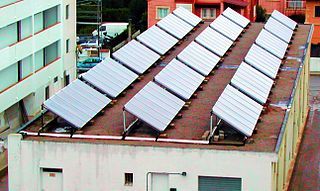
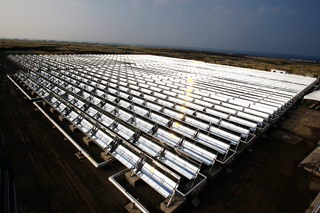
Here’s an article that highlights the use of concentrated solar power (CSP) in enhanced oil recovery.  Obviously, I’d be happier if that oil stayed where it was, but if you’re hell-bent on extracting it, and you need lots of heat to facilitate the process, CSP is sure better than burning more fossil fuels. 

Tagged with: , , , , , , , ,

Anyone who discounts what Bill Gates says on any issue has some explaining to do.  Recall that, when he ran Microsoft, Gates would famously make himself available to talk with employees who wished to present their ideas, but was aggressively unforgiving of people who hadn’t done their homework, and were unable to support their positions in reasoned and compelling ways.

But forget about IT, and simply consider Gates’ devotion to philanthropy, in which he uses reason (and his not inconsiderable fortune and influence) to tackle the big challenges that our civilization faces.  (more…)

Tagged with: , , , , , , ,