When we generate energy from renewable sources, we normally contemplate putting it on the grid. But then the issue arises: What about intermittency, and the need to back it up with dispatchable sources? People often forget that distributed generation does not face that challenge – whether it’s used at home, or in the commercial/industrial arena.
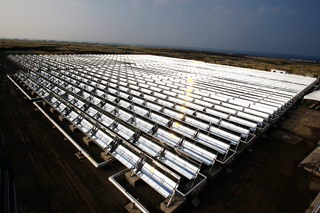
Here’s an article that highlights the use of concentrated solar power (CSP) in enhanced oil recovery. Obviously, I’d be happier if that oil stayed where it was, but if you’re hell-bent on extracting it, and you need lots of heat to facilitate the process, CSP is sure better than burning more fossil fuels.
Anyone who discounts what Bill Gates says on any issue has some explaining to do. Recall that, when he ran Microsoft, Gates would famously make himself available to talk with employees who wished to present their ideas, but was aggressively unforgiving of people who hadn’t done their homework, and were unable to support their positions in reasoned and compelling ways.
But forget about IT, and simply consider Gates’ devotion to philanthropy, in which he uses reason (and his not inconsiderable fortune and influence) to tackle the big challenges that our civilization faces. (more…)
I’ve been thinking about my upcoming talk at the monthly meeting of the Santa Barbara Savvy Investors, and I’ve decided to make this multi-varied, taking on a great number of different issues associated with our civilization’s use of energy. At a minimum, I’ll walk my audience through the most important big issues, which I would summarize as follows:
Our expanding population sports a growing hunger for energy, which, because it’s fed by fossil fuels, is causing a number of different and extremely daunting problems. In particular, our scientists tell us that we’re in the process of ruining our planet from the perspective of its ability to support most forms of life. Yet, the concept of humankind’s dealing effectively with a challenge of this scale remains dubious at best. Homo sapiens didn’t evolve as a species that comes together and decides to make sweeping changes. And the situation here in the U.S. is plagued by something even thornier: the fossil fuel industry has a stranglehold on our decision-making. Note that, after leading the world in the development of IT and communications in the 20th Century, America is committed to doing essentially nothing in terms of “new energy,” an industry that is soon to dominate the modern world. Not only are we not leading, we’re not even following very well; in fact, we’re trying to pretend it doesn’t exist.
Does this bode well? Nope. Not for American competitiveness in the 21st Century, nor for the quality of life facing our civilization. But can we architect a soft landing? I believe so. It’s a function of communicating the fundamental truth in the paragraph above to as many people as possible.
In a few days we’ll have a new version of the 2GreenEnergy website live, written to take advantage of some new features of WordPress. There will be only a few visible changes, one of which is the full use of the “nature” drawings (a few of which are on the home page currently) that we commissioned from a young artist in Vermont, Connor Finnerty. Thanks, Connor; I thought you did a fabulous job.
I hope readers will notify me if there are any bugs we didn’t see.
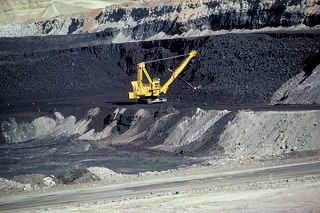
I believe he’s correct; I think money and technology will converge to keep the world in fossil energy for a very long time to come. We are out of cheap conventional oil, but we’re nowhere near out of unconventional oil, and we (unfortunately) have coal coming out our ears. (more…)
As suggested in this article comparing the total cost of ownership of a Nissan LEAF and a Nissan Juke, electric vehicle owners save a considerable amount over the life of their cars, due primarily to the significant savings in fuel costs. The real issue with EV adoption, however, is range, i.e., the inconvenience associated with not being able to take long trips. That means that, for now, the vast majority of EV purchases will be made by households with two or more cars, where one car is used for commuting less than 50 miles each way.
So, to how many American households does that apply? About 25 million. That’s a lot of low-hanging fruit.
If Cody Lundin had his way, Americans wouldn’t use any paper products. While the Discovery Channel’s “Dual Survival” star helps individuals live off the land in a more Aboriginal method, some industries, specifically paper product producers, are starting to do their part in improving production methods for the greater, greener good.
Here’s how four companies have improved their processes and products in an effort to reduce water usage and provide greener purchasing options to the eco-conscious consumer: (more…)
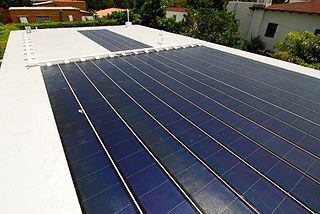
When I got started in this subject a few years ago, the efficiency of thin film solar (i.e., the percentage of sun’s radiant power that is converted into electricity) was measured in single digits. Here, we just achieved 16.1%, a huge increase from the former record holder at 14.7%.
I certainly don’t track every element of technological progress that the clean energy industry makes, but I occasionally take note, as it serves as a reminder of the big picture. The sun bestows more energy on the Earth in 90 minutes than all seven billion of us are consuming in a full year. All we need is a cost-effective solution that captures that tiny fraction, and the game will be over. No more environmental damage from burning fossil fuels. No more dangers of nuclear accidents and issues with waste disposal.
Today’s quantum leap in efficiency is just another reminder of how truly close we are. The quality is rising, and the costs are falling. Sounds good to me.
This is the singular theme of my thinking on the subject, which I would condense to “energy pragmatism.” I.e., I’m an advocate of renewable energy because – and only because – given the true costs of energy from nuclear and fossil fuels, it’s the deal of the century.
Of course, I shouldn’t be such an impassive kill-joy. It’s cool that this building is a living laboratory, a testimony to Germany’s fantastic level of interest in all things green.
Here’s a terrific video promoting a fun little three-wheeler that looks extremely well-conceived in every way – except the drive train. You’re going to ask your customers to put gasoline – deathfuel — into that cute, futuristic little thing? Sure, it gets 84 MPG, but doesn’t it practically cry out for electric drive? Given its mileage with gas, it will run forever on a 10 kWh charge. Come on, guys; you gotta rethink this.






 When I got started in this subject a few years ago, the efficiency of thin film solar (i.e., the percentage of sun’s radiant power that is converted into electricity) was measured in single digits. Here,