If you scroll to the bottom of this article on climate change, you’ll find a good video on an extremely important and interesting subject: getting Americans to embrace this as a major issue that requires urgent action. The presenter points out:
• This subject is already at the top of the priority list for most of the world outside of the United States.
• Here in the U.S., this is a generational thing; those over 60 tend not be as concerned as those under 30 – perhaps since older people won’t be around a few decades hence, when the damage will become more severe.
• Most people will require a reason that “hits home” in order to escalate this subject in their thinking, and thus in their voting behavior. Even events that have already occurred which many people attribute to climate change, e.g., super-storm Sandy, did not affect people outside of a small region and thus had limited effect on most Americans.
The guy quotes a number of surveys, so it’s hard to believe that this is simply an uninformed opinion. Yet it’s awfully cynical in its assessment of human motives, isn’t it? Is it possible that we really care so little about other people?
Are the falling prices of natural gas “wiping out” coal and nuclear? That’s what David Crane, President and CEO of Fortune-300 sized NRG Energy told the audience at a Wall Street Journal conference recently. As if that didn’t astonish event attendees, Crane went on to describe the potential effects of distributed generation in the near future, saying:
All the natural gas industry needs is a gizmo in your house to convert natural gas into electricity. It could be a fuel cell, it could be a micro gas turbine…..If you have firm gas in your house and, say you want to be as green as possible, you [won’t] need to be connected to the grid at all.
Electricity customers making decisions based on being “green?” From your lips to God’s ears, as they say, Mr. Crane.
From a practical perspective, let’s hope your words serve as a wake-up call for the utilities. Let’s put it this way: If my customers were thinking in ways that would soon make me irrelevant, I’d be hard at work re-fashioning myself in such a way as to put a halt to that terrible process.
Your course is clear, folks: Your customers want clean energy. Go get it for them.
I came across this gem on The Writer’s Almanac a few days ago, and I present it here as a reminder of an imperative that faces all of us advocates of clean energy. Don’t expect a sustainable future to be handed to you and to humankind; it will happen if and only if we insist on it.
Demand It Courageously
Make some room for yourself, human animal. Even a dog jostles about on his master’s lap to improve his position. And when he needs space he runs forward, without paying attention to commands or calls. If you didn’t manage to receive freedom as a gift, demand it as courageously as bread and meat. Make some room for yourself, human pride and dignity. The Czech writer Hrabal said: I have as much freedom as I take.
Dr. Abraham is armed to the teeth in his support of the notion of global climate change, though presents himself with the calm pragmatism one would expect of a scientist.
I was particularly impressed with his response on the Keystone XL Pipeline. When asked if the project will eventually be green-lighted and if it’s really needed, he said exactly what I routinely do, only with greater eloquence:
In order to avoid the most serious and expensive consequences of climate change, we need to reduce carbon emissions. Expansion of Keystone is not consistent with that goal. The total amount of oil in the Alberta Tar sands is equivalent to six Saudi Arabia’s. Mr. Watts and others have claimed that the oil will be burned regardless but just because this statement is uttered doesn’t make it true. Approval of Keystone will increase production by about 35-40% and it will lock us into a long-term supply of the dirtiest of the dirty fossil fuels. Not only are Alberta tar sands dirtier than conventional oil, but their by-product (petroleum coke) is being used as a dirty replacement of coal.
Rather than approve this pipeline, and further contribute to driving society over the climate cliff, we should invest in long-term clean renewable energy production right here in the United States. If we did this, we would receive the economic benefits and the world’s climate would improve at the same time.
We don’t know what the Administration will decide: my personal belief is that it will be approved and the Obama Administration will propose a quid pro quo approach to the environment–approving Keystone but enacting other policies to reduce emissions. The problem is that a quid pro quo doesn’t help the climate. It changes a fast burn to a slow simmer. From a political standpoint, if the Obama Administration, with John Kerry as Secretary of State, cannot say “no” to the dirtiest of the dirty fuels, it would show that we cannot say no to anything. I hope I am wrong about this.
During a flight to the East Coast a few months ago, I sat next to a pretty young girl – perhaps in her early 20s. During our conversation, I noticed she had a somewhat raspy voice, and I remember suggesting to myself that perhaps she was a cigarette smoker. When I asked her about herself, she told me that she was an American who had moved to Seoul to teach English to Korean kids, and she was home for a short vacation. I inquired about her experiences overall, and she gushed with excitement of how rewarding the whole thing was, how she loved the opportunity to travel to exotic places and meet different types of people. Then she paused and admitted something she didn’t like at all. “Do you notice my voice?” she asked sadly. I nodded. “It wasn’t like that 18 months ago when I arrived.”
Glenn Doty’s calculations in the comment on my piece on biofuels and electric transportation compare the costs of energy from solar PV and bioethanol. This is a very good way of looking at the subject. I thank Glenn, as always, for his thoughtful note.
Glenn points out that the PV “farmer” is losing about 19.7% on total revenue. That’s not good. But let me bring four things to his and your attention:
• The installed cost per watt on large systems is currently below the $3.50 he quotes; I’ve seen figures under $3 currently, and they’re still falling.
• Simultaneously, other important parameters are also improving.
• We just happen to be talking about PV; wind is far more cost-competitive.
• Somewhere, somehow, someone is going to put a price on carbon and this will change the calculus here enormously. They’re also going to have something to say about land-use competing with food, with water use causing shortages, with run-off from fertilizers ruining our waterways, etc.
In fact, it’s my fondest hope that we develop the political will-power to “price these things in.” But even if we don’t, there are still good people who will pay a bit extra so as to minimize their impact on the environment around them.
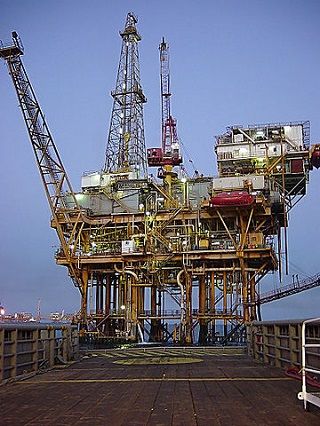
Oil rigs today are seen as a symbol of dirty energy, and there are a whole lot of them – over 4,000 oil rigs in the Gulf of Mexico alone. And while they’re built to last through all sorts of stresses, like storms, the ocean’s constant wear, and the pressures of oil gushing out from deep beneath the ocean floor, their usefulness is by definition limited: the oil eventually runs out, and unless they’re towed to another nearby drilling site, the usual choices are to tow them to shore and dismantle them or to turn them into artificial reefs.
Although these options will ideally occur after they’ve paid an ROI several times over their cost, both still seem like a waste of the labor, energy, and resources used to construct the rigs. From an environmentalist standpoint, toppling them for use as artificial reefs is even less effective than keeping them upright – keeping the rig vertical allows more biodiversity to flourish in the rig’s underwater structure.
Various uses for decommissioned oil rigs have been proposed, from turning them into eco resorts, to using them for aquaculture, for wind farms, or for residences. Since the market for oil rigs as real estate is probably not going to be very large, it’s a safe bet to say that the best way to use most of the rigs is for aquaculture and/or alternative energy. Given differences in what each of these activities needs, no one site will probably be good for all of these purposes, with the best pairings being wind and wave power generation for high-flux sites and fish and seaweed farming for more placid waters. Wind production has always been better offshore than on land, and using both wind and wave power for power generation has additional synergy in that using two different sources should help even out the power supplied.
Fish and seaweed farming are also synergistic in that seaweed help to filter the waste produced by fish farming and provide an extended lattice for small fish to shelter in. At the same time, the seaweed has improved growth rates from using the waste matter as fertilizer. For large rigs, there’s even ample space to put an onboard processing plant, so instead of piping crude ashore, it can be biofuel instead. Having aquaculture in open water also allows us to feed the ever-growing consumer demand for seafood without taking up more shoreline space, which is already scarce, what with the demand for housing real estate, in-place aquaculture facilities, and needed wildlife preserves, among other things.
While some might think converting oil rigs from their original use to such variant purposes will need a lot of investment, a lot of the infrastructure needed is already in place, including power lines that supply a lot of rigs with electricity, which can be converted to carrying electricity away from the rig rather than toward it. Where such lines don’t exist, pipelines can be converted to carrying electrical power. For seaweed and aquaculture the investment will probably be a lot lower than for alternative energy, and the day may not be too far off when the technology initially developed for the oil industry becomes the anchor that allows us to use the ocean’s resources in a sustainable way.
Brandon Peters is an entrepreneur, a writer, and an avid observer of both the oil industry and alternative energy.
Demographically, Wyden is perfect for the job (an Oregon Democrat). Thus it’s clear that not everyone on Capitol Hill agrees with him on this initiative. But the fact that anyone in that blighted region of the universe is even talking about the subject is a pleasant surprise. Per the report linked above:
(Wyden) is planning to hold oversight hearings with federal agencies responsible for building out the smart grid to understand whether they are working on all angles to facilitate a transition to a digitized grid, especially on the consumer end.
In addition, he said he’s working on a tax reform measure aimed at achieving “neutrality and parity” for all energy technologies that could strip tax incentives for the oil and nuclear industries. Technological parity, he said, would help newcomers such as energy storage, which is key for introducing more renewable energy and demand response to supply electricity.
“Modernization of the country’s electric system is under way. Are we going to allow that momentum to accelerate or just play nice and think it is going to happen by osmosis?” Wyden told the Edison Foundation’s “Powering the People” conference in Washington, D.C. “The Recovery Act certainly helped and promoted some innovation. … The question is now can we mobilize and make sure that the private sector, utilities, regulators, financial community and all those that helped us get us to where we are today reach the next level?”
A level playing field for clean energy? An end to subsidies for the oil companies? You have my full support, sir.
(The efficiency of PV) is still 10x better than biofuels, but the capital costs of all those solar panels are probably much more than costs of planting, harvesting, and converting the plants into biofuel….which is why a lot more cars are powered by biofuel than electricity.
You may be right about the former, i.e., the capital costs. However, though I can’t find a study on this, I wouldn’t discount the capital costs of biofuels (and, more to the point, the operating costs) of the tractors, etc. Also, the opportunity cost of arable vs. desert land is enormous – and seldom brought into the equation.
As to why more cars are powered by biofuel than electricity, I think it’s more a matter of our current devotion to the dispensing infrastructure for liquid fuels, which is (albeit slowly) eroding. The shift away from burning hydrocarbons that are ruining our planet in favor of plug-in vehicles powered by renewables isn’t happening as fast as many of us would like, but it’s most certainly in motion. And when liquid fuels leave, they won’t be coming back. In the words of Simon and Garfunkel, “When she goes, she’s go-o-o-o-ne…”
I thought I’d post an unusual conversation I had earlier today with Paul DiRenzo of Schuylkill County, Pennsylvania regarding his concept for a 300 MW pumped storage project.
Paul: Our small family group remains convinced that planned coal surface mining and reclamation can result in a pumped storage scheme. Accordingly, we are currently studying this approach at a specific site here in the heart of the anthracite coal region of eastern PA, as well as the PJM-RTO. More info available at: www.opportunityforblythe.com
Craig: Wow, I have to say that this is interesting, but I’m not a fan of coal mining.
Paul: That’s understandable. However, there’s an old saying /slogan… “It’s not just coal…it’s Anthracite!”
Craig: Huh?
Paul: A large worldwide market for anthracite coal includes water / wastewater filtration media. So anthracite is actually used to clean the environment. It’s a niche multi-use coal comprising less than 1% of the coal burned used in the world. 99% of the world thermal generation coal(s) are of lower bituminous and lignite rank.
Any help sharing our project is greatly appreciated.
Craig: I see. Let me think about this.
Paul: There are other existing and planned pumped storage schemes that utilized abandoned surface / underground mines. Beside ours, we are not aware of any other that integrates substantial natural resource recovery to help subsidize pumped storage development costs. Are you aware of Eagle Crest Pumped Storage in Cal?
From a financial standpoint the project is unique because +$200M worth of high grade anthracite coal will be recovered in the process of creating the lower reservoir by and through surface mining and reclamation. What’s more, surface mining will produce sufficient earth and rock for upper ring-dam construction. The integration of mining and pumped storage would greatly reduce construction costs. With the cost of the lower reservoir and earth moving absorbed by mining and coal recovery, we anticipate a relatively low $/KW installed cost. We have not yet completed long range financial analysis. We seek partners at this early stage…essentially to take our FERC pre-permit and run with it.
Craig: Neat idea, though, obviously, I’d rather see the coal stay where it is. And yes, I had come across Eagle Crest.
Can you share some of the financial information that may serve to attract people? What’s the cost? The terms of the PPA? The IRR?
Paul: This is early stage; we’re looking for partners/investors to explore this.
Craig: Well, this sounds sketchy in the extreme, but I’ll post something on it anyway, since it’s unique; I’ve never seen another one like this.