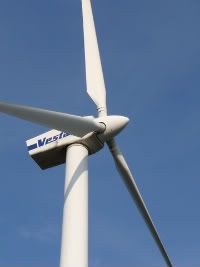
The 2GreenEnergy mantra “It’s business” is played out in this interview with General Electric’s Energy Infrastructure CEO John Krenicki on the company’s investment in renewables. As with most such interviews, the content here is extremely broad, general, and at times evasive; I find it funny when I see someone on camera answer a direct question in a way that has absolutely nothing to do with the query. But to be fair, I suppose that’s part of the skill-set of the CEO of any Fortune 25 company: staying on-message.

It’s important for us all to understand that a company with the global footprint of GE has (apparently profitably) invested billions of dollars of resources into solar and wind.  The wind business that they bought from Enron for $300 million did $6 billion in high-margin revenue last year. That gets a lot of attention from Wall Street.

And let’s not forget that all this is being done in the context of renewable energy that comes with a price tag that is significantly above that of energy from fossil fuels. So exactly when will the price of renewable energy fall to the point that it’s competitive with fossil fuels — and coal, etc. can become a thing of the past? A friend of mine recommends this 83-pager on wind power that purports to answer that question. But I can see from its synopsis that it boils down to this: with natural gas demand factors falling and the supply factors skyrocketing, renewables will not be directly cost-competitive for some time.

Of course, here is the real problem that advocates for renewables face: customers of fossil fuel-based energy are not paying anywhere near the true costs.  When we buy a tank of gasoline, the manufacturer simply passes the cost of cleaning up the mess on to future generations — and they’re so powerful that no one even thinks of taking them to task. What would happen if we were to close that loophole? What if the price of a gallon of gasoline rose to include the cost of the healthcare to deal with the lung disease that is caused by burning it, and to include the cost of pulling the CO2 and other garbage out of the atmosphere?

The answer is obvious: We’d have a level playing field on which electric vehicles and renewable energy would be rightly perceived as the bargain of the millennium. And that, in very short order, would be the end of internal combustion engines and the oil companies in very short order. But as long as the oil and coal companies retain the power to defecate on the health of future generations and nothing happens to change the way we deal with them, renewable energy will continue to fight an uphill battle.


Tagged with: , , , , , , , , , , ,

PhotobucketI intend to make only a minimum of remarks about the ethics of environmental stewardship, for fear of preaching to the choir, as well as offering opinion on a site otherwise devoted to fact. Yet occasionally, experiences call upon me to write such a post.

The first experience on which I’d like to comment is one that I know I share with many readers: the PBS special on the National Parks. I know we are all deeply moved to learn about the discussions between John Muir and Teddy Roosevelt and how, at the beginning of the last century, our world was transformed forever with the establishment of protection for many of the national treasures.

PhotobucketThe second experience is a far more personal. I took my 13 year-old daughter (pictured here) and one of her friends to the Santa Barbara Art Museum last Sunday for a docent-led tour of the travelling exhibit of Jean-Baptiste-Camille Corot. I happened to join another tour an hour or so later in the day for a discussion of a piece of contemporary art: a huge piece of pale grey and pink with almost no content; it was like looking out on a dense fog. The docent asked the crowd, perhaps 25 of us, what we felt the artist had intended to communicate. I didn’t answer, as I’m by no means an art expert, and I certainly didn’t want to pontificate in front of this group of strangers who couldn’t hit their “back” button and shut me up.

But in fact, the artist’s message was very straightforward me: ambiguity. We struggle to assign meaning to the people, the things, and the events in our lives. We live in a cold and uncaring world, one that is quite indifferent to your and my happiness. Our presence in this universe is the only thing that confers meaning upon it.

And with this fact comes responsibility. Exactly what meaning do we confer? What decisions and actions do we make, and what are their consequences? What difference will we make in our own lives, in the lives of those around us, and in the lives of generations yet to come? It’s up to each of us to create lives of true meaning – and preserving the natural purity and beauty of our planet is a great place to start.

Tagged with: , ,

PhotobucketI’ll be moderating the “infrastructure” panel at the AltCarExpo in Santa Monica, CA this Friday. I already feel a warm connection with my panelists that I’m sure will make for a good presentation to the audience when we take the stage at about 3:30 that afternoon. And I’m very glad to be moderating; I’m happy to provide answers as I see the issues from my political and technological viewpoints, but I feel that asking good questions is probably just as important.

I’ve met one of my panelists, AC Propulsion CEO Tom Gage, several times. A man for whom I have the utmost respect, Tom describes himself as a “car-nut since childhood.” He took AC Propulsion’s helm from founder Alan Cocconi (designer of General Motors EV-1 — star of “Who Killed the Electric Car“) and leads a team of people here in a California and in Shangai in building the world’s most advanced drivetrains for electric vehicles, including BMW’s Mini-E. “It just rubs me the wrong way to start up a gas engine,” Gage says. I know the feeling.

I’ve also established friendships with panelists Paul Scott from Plug-In America and Enid Joffe of the Clean Fuel Connection – both magnificent people with huge stores of knowledge to share. Again, I hope anyone in the area will drop by.


Tagged with: , , ,

PhotobucketAs part of my report “25 Tips for Renewable Energy Businesses” I include an idea that I call “Match Your Brand to Customers’ Self-Expression.”

I believe that the most fundamental ingredient in successful marketing is understanding your target market’s “self-concept.” Generally, people like themselves; they approve of who they are and how they think. And they manifest this self-concept by aligning themselves with brands that reflect that approval back to them. If you doubt this, I offer this simple challenge: write down a few of the values that are at the core of your own self-concept—the beliefs that make you who you really are. I think you’ll find that the car you drive, the clothes you wear, the books you read, etc., are all a very direct reflection of those values.  And no place is this more important than in the marketing of environmentally sustainable products and services.

I know that you and I are are totally wrapped up in the idea of clean energy — both on a personal and professional viewpoint – and I’m cautious about thinking that everyone on Earth is as tuned into this as we are – which is obviously not the case. But each time I wash my 14 year old BMW with its 206,000 miles on it, I remind myself of the promise I made to myself (that I’ll never my another car without a plug on it). I’m SO done with traditional transportation, with defining myself in terms of what I drive, with needing a car that will go 130 MPH, with driving a car that causes a little piece of environmental death each time I step on the gas. I simply can’t help but think that other people must be tired of this stupidity as well.

I believe most of the 25 tips apply fairly well to businesses of all types, but I have to think this concept is even more relevant in the clean energy space. As I’ve written elsewhere, the zeitgeist that surrounds environmental stewardship is probably the most pronounced and sweeping trend of the 21st century. 

I’m reminded of the seachange that took place in the fur industry in the 1960s, when civilization took hold of the brutality by which minks and chinchillas were slaughtered to make ladies’ coats.  In a very short period of time, women who didn’t get the message and weren’t willing to make this minor sacrifice were regarded as pariahs.  It seems to me that the situation is the same now, with Hummer drivers and others who somehow haven’t developed some level of eco-consciousness. 

In a few words (by no means original), I would say that this consciousness is summed up as:

I live in a world where others’ rights — even the rights of those as yet unborn — are just as important is mine.

I do not own the Earth or any piece of it; I am a caretake of Earth for a short period of time.

I am proud and happy to make sacrifices of my own convenience and comfort to ensure that the world a better place for us all to live — now and forever.

My advice:  Do some research to validate the idea that this spirit is alive in your target customer base.  If it is, work hard to capture the essence of that spirit in your marketing.

Tagged with: , , ,

This week I had the pleasure of speaking with Dr. Peter Lilienthal of Homer Energy — arguably the most experienced person on the planet regarding the optimal mix of renewable resources within a power system.  He’s spent the last 30 years in the clean energy industry — 17 of them at The National Renewable Energy Laboratory (NREL).   Peter’s software — which he makes available for free — simulates systems that have multiple renewable resources blended with one another and with traditional fossil fuels to supply the minute to minute demand for electric power.
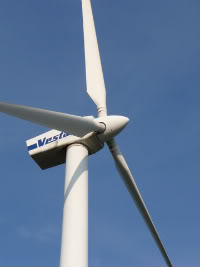
Let’s explore what all this means exactly. Suppose you’re responsible for power generation in a certain region – anything from the scope of the Western United States to a small remote village – and that you can have multiple sources for this power. Suppose, for instance, that you’d like to make use of wind turbines whenever possible, but you need diesel generators as a supplement. Exactly what happens when the wind slows down? Or, consider an even more urgent question: what happens when it blows like stink?

In the US, where renewables are a regrettably small percentage of our total electrical power mix, it’s really not a huge issue. Coal provides 48% – 49% of our power, and those plants run 24-hours per day turning out power with extreme consistency – albeit at considerable expense to the environment. But where renewables are a relatively large percentage, e.g., Europe – or when they’re in the process of growing, which most of us hope to see here in the US, it’s a huge issue.

This is a game of optimization, i.e., how does one deliver the cleanest, least expensive, most reliable blend of power onto the grid? In the course of my conversation with Peter, I got an immediate sense for how difficult this process of optimization is, due to the many variables at play:

– You want to favor renewables over fossil fuels wherever possible, but you don’t want an unacceptably high risk of brownouts.

– Dirty power sources are only dirty when you use them; there is nothing wrong with coal or oil if it’s used as a back-up. However, if you might later need power from a coal or nuclear plant you can only back its output down a limited amount. If you turn off a coal plant, it takes about 24 hours to bring it back online. Nuclear is even less flexible.

– For the greatest reliability, you don’t want all your eggs in one basket; you want to distribute power generation methods across different technologies.

– You want to minimize cost. There is plenty of clean energy out there if you’re willing to spend enough to get it. (I laughed out loud in this part of the conversation, as I had just published a blog post on far-offshore wind farms, which would be ideal, if it weren’t for the cost.)

– Utilities don’t want to decommission plants that are working fine.

As suggested above, this is a much bigger issue internationally. Up until the last decade, most of Peter’s attention was on small, remote areas in developing counties. But when the world decided that money was too tight to put too much attention on impoverished people in poor countries, the area of focus became the Australia, Alaska, and the Caribbean. Island communities are perfect for renewables as their power is entirely generated by importing oil – not at all ideal, insofar as it’s expensive and its dependence puts the country’s security at risk. They can also get to high renewable contributions quickly with just a couple of projects.

“Wow, 30 years.” I mused. “That’s an impressive period of time. You must have seen some heavy-duty changes. Can you take me through some of that?” I asked.

“When I got into this, it was mostly anti-nuclear activists. And by the way, I’m sad to report that nuclear isn’t dead. When you hear politicians say ‘We need to keep all our options on the table,’ that’s usually code-speak for ‘let’s resurrect nuclear power.’”

“Then what happened?  Did the activists just go away?”

“No, but then in 1990s they were joined by ‘the tinkerers’ and the ‘mad scientists,’ followed by ‘the arrogant millionaires’ from their dot-com IPOs looking for the next big thing.”

“So now we have the makings of a trillion-dollar industry, which is going to need all kinds of skills and experience.”

“Yes,” Peter replied. “As you put it on your website, ‘It’s business.’ Now we have pragmatic people – lots of them – working to make viable businesses. HOMER Energy’s user base is a community of the innovators, working hard with their sleeves rolled up, looking at all the different ways to get this done.”

35,000 people all over the world use Homer Energy software to optimize the delivery of renewable power — and about a thousand new users join the family each month. What a fantastic contribution to the world of sustainability. On behalf of us all, Peter, thank you.

Tagged with: , , , , , , , , , , , ,

In this quite lucid and compelling video on offshore wind farms, The Sierra Club points out the numerous benefits of this technology. Until I watched it, I was unaware that turbines could be 12 miles offshore, and that the continental shelf off the eastern US was shallow enough such that the units could be anchored to the ocean floor that far from land. In my mind, this makes a compelling case. Of course, the issue is cost, which the video does not mention.

Sierra spokeperson Ivy Main, the renewable energy chair for the club’s Virginia chapter does an excellent job in contrasting this solution with dirty power sources like coal, but does so in a calm, measured, and professional tone.  She also points out that this idea does not require the transmission of large amount of power over thousands of miles, which, of course, is a requirement of the solution I favor, solar thermal. However, with high voltage direct current (HVDC), which I also favor, there is relatively little power loss in such a scenario.

Again, it is my fondest wish that we can somehow put politics aside, conduct a fair-minded study of all the options that are available to us as a nation, and make the right decision. There are, of course, numerous reasons that this is not happening — the most obvious of which, as I’ve covered many times, is the power of the interests that are working to prevent it.

But here’s another wrinkle: we seem to be working within the paradigm that a great number of different technologies are all going to be part of the long-term solution, and that anyone who holds a contrary position is an extremist. Frankly, I’ve never understood that. I liken this “macro” decision to the “micro” decision that I would make if I were going to take our farm off the grid. Would I have some array of wind turbines, solar panels, and geothermal heat pumps? Probably not. I’d do a study, and try to remove the biases of the salespeople.  Then I’d adopt the technology that made the most sense and implement it in sufficient quantity to fulfill my needs.

I really fail to see where this analogy breaks down. There must be a single best solution. It’s my hope that we can identify it and get it done.

Tagged with: , , , , , , , , , , , ,

PhotobucketThose of you who read my Three Brass Tacks article on hydrokinetics will remember the concept of the HyPEG (Hydrokinetically Powered Electric Generator). I’m thrilled to announce that we at HLK (Hydrokinetic Labs, LLC) made significant forward progress this week, where US Representative Geoff Davis (R-KY) recommended that the DoE take a hard look at funding and developing HyPEG technology.

It’s too early pop the champagne corks, but it’s certainly movement in the right direction.

PhotobucketI am by no means an expert in fluid dynamics or hydrokinetics more specifically, but I must say that I’m happy to be learning more every day about the opportunity that exists in extracting energy from the motion of earth’s rivers and oceans. Intrinsically, there is a lot to like there, since the vast majority of the sun’s energy that our planet absorbs goes into our waters, rather than our land masses and atmosphere. The challenge lies mostly in the fact that, though water is a far more dense fluid than air, it tends to be slow-moving – almost all of it under 3 knots.
In fact, this was my initially negative reaction to the concept of the HyPEG – if you’re taking kinetic energy from the river, isn’t the velocity of the water is far more important than the mass? The answer: Sort of. More relevant: The power of a rotating structure is its speed times its torque. And yes, in the HyPEG, that speed won’t be large, but the torque will be enormous. When the inventor quoted the figure (30 million foot-pounds), that shut me up really fast.

There are numerous other ways to overcome this challenge, however, and one of them is depicted in this video on a technology called vortex-induced velocity, which is under development at the University of Michigan. Note that things that swim do so by taking advantage of the density of the fluid, and using their bodies or tails to create temporary vortices of fast-moving water.

Though there are no cost figures mentioned in the video, to me, this sounds like an expensive solution. I should also note that it seems like a danger to aquatic life – a “sushi-maker” as they say — to describe submerged devices that that tend to chop up fish. Having said that, I have to applaud the creativity. Hey – may the best technology win.

Tagged with: , , ,

We’re starting to see a wave of articles that validate what we’ve been saying here at 2GreenEnergy since its inception.  That is, renewable energy, as a reaction to peak oil and climate change, is probably the most important economic boon that will occur in our lifetimes.  I call your attention to the Green Chip Review for really good content in this vein.
Where conventional thinking has been that changes in our traditional energy sector would cut jobs and stifle economic growth, we’re beginning to see that the precise opposite is true.  I happened to have been in the audience of George H. W. Bush as he gave a speech to a less-than-inspired crowd in Woodland Hills, CA in 1992 during his unsuccessful re-election campaign, and I recall his principal message:  his opponent, Bill Clinton, was a liberal.  He pronouced that word as if it had the power as a political weapon of labeling his enemy as a “Nazi” or a “Communist.”  He went on to tell us that the tenets of liberalism included strict environmental regulations that would eliminate millions of jobs, and explained how “we’d soon be up to our eyeballs in spotted owls.”  (I’m not making this up.)

But I think we’re now seeing the truth — not necessarily about liberalism vs. conservatism, but most certainly about environmentalism vs. Big Energy — as it comes to the economy.  As one example, we’ve seen billionaire Venture Capitalist John Doerr — the man who helped bring along Google and Amazon — calling renewables “nothing less than the re-industrialization of the whole planet.”

The considerable enthusiasm that we’ve received for the Hydro-powered Electrical Generation (HyPEG) that I wrote about in one of the Three Brass Tacks articles, of course, is rooted in the fact that HyPEGs’ eventual ubiquity will mean the end of coal – of scarring and poisoning the earth and its people. But the idea that we’re going to need tens of thousands of these HyPEGs – and that someone will have to be paid to build and install them – has not gone unnoticed either.

Whether it’s hydrokinetics or solar thermal, wind or PV, this movement will create an enormous number of jobs, and stimulate a huge velocity of cash for the coming decades — at least.

For once, we’re all in the right place at the right time.

Tagged with: , , , , , , , , ,

As I’m sure many readers have observed, I am normally cynical about the honesty of government. Even on Washington’s best day, I’d far rather see things happening in the private sector than in the public sector. Yet I have to say that I’m pleased with the Obama administration’s aggression in supporting renewable energy.

I have no insight into the workings of the selection process by which stimulus money is handed out. As far as fairness is concerned, I’m told that the process favors large companies over small ones, and I’m sure that I would find the details, if I were privy to them, just as unpalatable as the fine points of sausage-making. Yet I have to say that it’s a refreshing change from the days that oil-men ran the country and the DoE was forced to sit on its hands while essentially no progress was made in developing alternative energy sources, and the CO2 levels went through the roof.

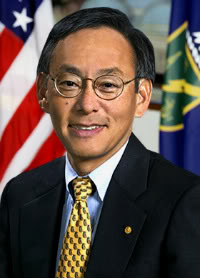
From these recent annoucements from Treasury Secretary Timothy Geithner and Energy Secretary Stephen Chu, it is apparent that for some reason our boys in Washington favor wind and photovoltaics over solar thermal, hydrokinetics, and the others.  This concerns me greatly; one can only think that we’re entering a new realm of politics as usual. At least this time we’re wrangling over technologies that won’t kill us.

Tagged with: , , , , , , , , , , ,