My first duty tomorrow morning is dropping off my daughter Valerie at school.
Then it’s off to breakfast with Bruce Severance, one of the true visionary in electric vehicles and sustainability. I’ve spent many hours with Bruce — mostly driving all over the state — headed to EV conversion seminars, as well as meetings with battery suppliers, carbon composite car body designers, and everything in between.
The common denomintor? Listening. I don’t speak; I take notes.
Consuelo Mack’s award-winning show WealthTrack on PBS just aired the second part of the interviews they conducted with Bill Paul, 2GreenEnergy’s financial analyst. Again, our thanks to our friends at PBS for all the airtime, and congratulations on their decision to hail Bill Paul in the same way we do here: a visionary whose strength is based not on his bombast, but on his track record.
Of course, Bill’s core abilities lie in what he knows about the industry, and his ability to distill the enormous quantity of information he pores through every day. But I also admire the way he handles himself in front of the camera: he’s completely imperturbable. Catch his interviews here.
Traipsing around the Solar Power International show just now, I was struck by the overwhelming scale of the event itself. I was one of a swarm of people – tens of thousands of them from countries all over the world — rambling over two gigantic halls hosting acres of displays.
Accompanying that impression of enormous scope is the feeling that this industry is here to stay, communicated by how many older and established industries have formed strong interconnections. In addition to the dozens of PV and CSP systems (different technologies, configurations, materials, etc.), we have:
Components (uncountable numbers of connectors and subsystems)
Testing and certification (Companies that test everything from bulldozers to Band-Aids now have business practices that specialize in the safety and efficacy of solar.)
Robotics (Machine tools that make cars and printed circuit boards now arrange PV cells into panels.)
Supply chain management. (SAP had its own booth, demo’ing its enterprise resource planning software developed specifically for the solar industry.)
I’m constantly amazed at how talented people are nowadays. Take the two folks who duked it out on this debate on California’s Prop 23 this morning on KPCC (Pasadena, CA) — both of whom did a terrific job of articulating their positions.
Of course, as a renewable energy advocate and a fan of living things, I have to admit that I was rooting for the No position, but that woman on the Yes side handled herself pretty darn well — in the face of what many people would consider overwhelming rationale in favor of her opponent. Not one but both gubernatorial candidates are against Prop 23, and 98% of the money funding the initiative comes from two Texas oil companies. I’m glad they didn’t ask me to try to defend that one!
If you have a few minutes, you may what to check it out.
The motto of 2GreenEnergy is: “The Answer’s Always Yes.” I.e., I don’t want to find myself in a position where I have to tell someone with a business in sustainability that I can’t help them due to my not having as associate in some particular business discipline. Yet several people have noticed that I don’t (yet) have an associate practicing the types of law that would be most relevant to entrepreneurs in this space, e.g., intellectual property protection.
I’ve been keeping my eyes open for a path to rectify this, and I think I’ve nailed it. At the Renewable Energy Finance Forum a couple of weeks ago, I met a top-notch lawyer with a not-too-ridiculous billing rate from Santa Monica, and I’m trying to put together a working arrangement. More soon.
The Bell Group's New Mexico parking lot solar array was built by Schott, a local solar company
The Bell Group announced at the end of August that they have built the largest solary array in New Mexico at their company headquarters. The five-acre installation uses more than 5,000 solar modules and will generate in excess of 1,600,000 kWh of electricity annually. That is enough to meet 80 percent of the company’s electricity needs there. Bell’s solar arrays form a roof over what was previously an open parking lot, shading employee and visitor vehicles as well as providing power.
The Bell Group’s array will not be the largest in the state for very long. The Department of Veteran Affairs (VA) Health Care System in Albuquerque, New Mexico, announced it is installing a 3.2 MW photovoltaic system that will include a car port as well as roof-mounted arrays. (more…)
A guy called me yesterday hoping to meet me at the Solar Power International show and ask me about the industry. I really don’t mind creating appointments to meet people; I have several lined up, as this is a major show — and right in my back yeard, too. But I wanted to get a preview of what he wanted.
“Oh we plan events. I want to know the most probably future for residential PV is — the precise adoption curve that the industry expects to see. I just spoke with Stephen Lacey from Renewable Energy World.”
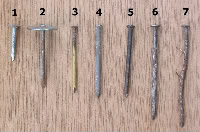
I laughed. “I’ll be happy to talk with you. But you’ve already gotten the scoop from the world’s foremost expert. Stephen is about half my age, but he knows 10 times more about industry details like this than I ever will. The young man is ‘nails’ – as I like to say.”
I’m not a walking encyclopedia, but I’ll be there as well. If anyone wants to chat, please let me know.
I’m having breakfast shortly with an inventor who claims to have perfected the hydrogen engine, optimizing the blend of gases that he adds to the hydrogen to maximize the energy output. If this looks as solid as it sounds on paper, I have a very nice home for his idea, as my friends at the Ammonia Fuels Network has a huge appetite for all things hydrogen.
Here’s a quick question for anyone aspiring to understand clean energy investors’ mentality. Does capital formation usually favor:
a) certainty and confidence, or
b) the complete lack of clarity we find in Congress regarding an energy bill, a carbon tax, loan guarantees, and cash grants?
If you picked “a,” you have what it takes to be a Wall Street wizard.
People write me constantly, expressing their bewilderment in investors’ lack of appetite for putting hard-earned cash into entrepreneurial efforts in the renewables space. But given the impasse on energy policy in Washington and in most of our 50 states, is it really that surprising?
What’s the matter with simply making a decision to join the rest of the world and coming together with a decision to support clean energy? What exactly is the worst that can happen if we put a tax on pollution and levelize the playing field for alternative energy? Millions of new jobs? A cleaner environment? An end to the bleeding of $1 billion per day that we’re borrowing to buy oil from our enemies?
In response to my recent piece on renewable energy politics, Ron Hill, very bright guy, writes some cogent stuff on his position as a climate change denier, and concludes:
The failure to insist on objective science is part of the problem with you folks who make your living in the “alternative” energy field. I do not make any money on either existing energy or alternative energy. Can you truthfully make the same statement?
The answer is no, I can’t. And I agree that those who stand to profit from the world’s acceptance or rejection of global climate change (obviously) have an incentive to shade the data in their direction. But, as I point on in my recent book on renewable energy: “What would you guess represents more money (and thus more incentive to bias one’s findings): the business of atmospheric research, or the business of selling of trillions of gallons of gasoline?”
I also point out that the vast majority of climate scientists who have studied global warming and published peer-reviewed papers on the subject support the theory.



 My first duty tomorrow morning is dropping off my daughter Valerie at school.
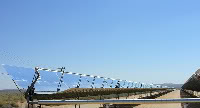
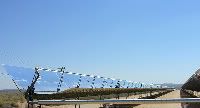 Traipsing around the Solar Power International show just now, I was struck by the overwhelming scale of the event itself. I was one of a swarm of people – tens of thousands of them from countries all over the world — rambling over two gigantic halls hosting acres of displays.
 I’m constantly amazed at how talented people are nowadays. Take the two folks who duked it out on
 The motto of 2GreenEnergy is: “The Answer’s Always Yes.” I.e., I don’t want to find myself in a position where I have to tell someone with a business in sustainability that I can’t help them due to my not having as associate in some particular business discipline. Yet several people have noticed that I don’t (yet) have an associate practicing the types of law that would be most relevant to entrepreneurs in this space, e.g., intellectual property protection.


 I’m having breakfast shortly with an inventor who claims to have perfected the hydrogen engine, optimizing the blend of gases that he adds to the hydrogen to maximize the energy output. If this looks as solid as it sounds on paper, I have a very nice home for his idea, as my friends at the
 Here’s a quick question for anyone aspiring to understand clean energy investors’ mentality. Does capital formation usually favor:
 In response to my recent piece on


