I had the first in a series of interviews with Dr. Robert Pollin from UMass Amherst’s Department of Economics and Political Economy Research Institute this morning, in an effort to triangulate on a central issue:
What is the precise economic impact of the migration to “new energy” – both efficiency and renewables? (more…)
A few months ago, I ran across a human dynamo by the name of Mary Jo Shaub, and I am now busily adding her creds to the website as an associate, in order to address a need that I’ve long wanted to fill. Mary Jo has 20+ years’ experience in helping agricultural businesses explore their renewable energy potential, especially biomass — utilization of farm waste. And she makes it happen, by writing grant proposals and assisting with loan applications.
Mary Jo and I met initially at a dairy farm nestled in the Blue Ridge. Great learning experience. Glad I wasn’t wearing my best shoes.
I’ll hope anyone interested will contact us to pursue a conversation.
There is a lot of research and system development going on in the renewable energy field right now. Vector gives you a taste of some very different technologies that could – some day – change the economics of renewable energy generation.
Two of our research technologies are nano-materials. Working at molecular level, scientists are creating new materials with extremely useful properties. Once the materials have been designed, they can be scaled up for mass applications.
Our third example concerns developments in tidal power, one of the few sources of renewable energy that is as reliable as clockwork – in fact, as reliable as the orbiting moon. The moon’s gravitational pull is the source of tidal power.
PS: I don’t understand how corporations can “extend their powers” as a result of the Supreme Court ruling you mention.
Craig: It’s fairly simple. Let’s take an example. Chevron made $24 billion profit last year. Now I’m not saying that they will do this, but as of January, 2010, they can spend as much of that as they want influencing our elections, ensuring the victory of a candidate who supports them, who will make things difficult for renewable energy and electric transportation while continuing or expanding favors for oil, which currently include: (more…)
Not to carry on too far on this subject of the US Supreme Court’s decision to empower corporations with the rights of real persons, but I’ve begun to realize how truly intractable the problem is, and why: virtually no one knows about it. My mother, who reads the New York Times and the Philadelphia Inquirer every day of the week, wasn’t exactly sure what I was talking about when we discussed this on the phone a few minutes ago. David Cobb, the attorney who gave the lecture that I attended on the subject last Sunday, says he’s had no coverage whatsoever from the mainstream (corporate-owned) media. Of course, this isn’t at all surprising, but it creates an incredibly difficult condition to overcome.
I’ve been preparing for my upcoming interview with Bob Pollin, Economics Professor at UMass Amherst, as the basis for my next book – this one on Clean Energy Job Creation. Here’s a list of questions I hope to cover. Please feel free to suggest any new ones.
Thanks so much for taking the time with me here, Bob. I have a few questions I’d like to ask. Btw, I’m not one of these guys who goes into a project trying to prove what he’s already assumed. I DO have a set of beliefs here, but I actually hope I’m wrong. (more…)
Or, it’s yours – absolutely free – if you purchase a copy of Renewable Energy – Facts and Fantasies from Amazon.com on October 29, 2010 — the official launch date for the book.
This $149.00 report will be provided for no cost ONE-DAY ONLY, on October 29, 2010, to those who purchase the book Renewable Energy – Facts and Fantasies for only $14.95 from Amazon.com.
For more details about the free report as well as the book itself, visit the following page:
The US government’s stimulus package will double the country’s renewable energy capacity by 2012 (from 28.8 GW from renewable energy in 2008 to 57.6 GW) , according to a White House progress report launched by Vice President Joe Biden towards the end of August. At the same time, stimulus action is expected to cut the cost of solar generation and EV batteries
“The government plants the seeds, the private sector nourishes and makes it grow,” according to the Vice President. “If we’re as innovative as we’ve been in the past, we launch entire new industries.” Biden expects the cost of solar power to drop to equal fossil fuel generated power by 2015.
But is this rate of transition fast enough? Is the rate of transition in our hands? And what will the consequences be if oil supply drops faster than we can replace it with renewable sources?
At this early point in the development of my new book on clean energy job creation, I’m still just trying to find my feet. As the creation of new jobs for Americans is largely a subject of politics and macroeconomics, and as I’m an expert in neither, my choice of interview subjects and understanding exactly what I’m attempting to glean from folks in these areas is going to be of paramount importance. Thus, I’m treading very slowly and carefully at this point.
Having said that, I’m starting to make some rough guesses as to what direction this project will ultimately take. (more…)



 I had the first in a series of interviews with Dr. Robert Pollin from UMass Amherst’s Department of Economics and Political Economy Research Institute this morning, in an effort to triangulate on a central issue: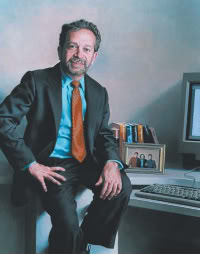
 I happened to be driving across the Los Angeles basin yesterday to see a local client when I heard the radio commentary of Robert Reich (Labor Secretary under Bill Clinton) on the
 A few months ago, I ran across a human dynamo by the name of Mary Jo Shaub, and I am now busily adding her creds to the website as an associate, in order to address a need that I’ve long wanted to fill. Mary Jo has 20+ years’ experience in helping agricultural businesses explore their renewable energy potential, especially biomass — utilization of farm waste. And she makes it happen, by writing grant proposals and assisting with loan applications.
 Here’s a discussion I’m having with a reader on the subject of the

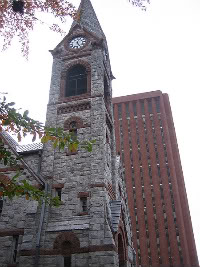




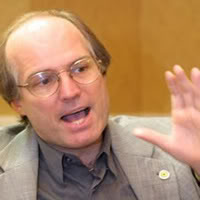
 At this early point in the development of my new book on clean energy job creation, I’m still just trying to find my feet. As the creation of new jobs for Americans is largely a subject of politics and macroeconomics, and as I’m an expert in neither, my choice of interview subjects and understanding exactly what I’m attempting to glean from folks in these areas is going to be of paramount importance. Thus, I’m treading very slowly and carefully at this point.


