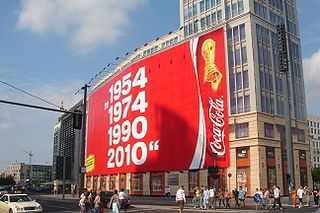
I’m sure many readers here share my interest on the broader topic of sustainability, whether it’s transportation, building design, or agriculture. And we can certainly count on the Sierra Club to keep us posted on many of these larger topics. I recommend their article here on unsustainable foods and growing methods.
I may have mentioned that I eat very little that is more evolutionarily developed than fish, and that I try to use websites like this one to stay away from species that are endangered. I find it amusing to show up at a convention on renewable energy, sit down to lunch, and realize that the default meal is a piece of prime rib the size of a softball. I suppose this is understandable at conferences on football coaching or drag racing, but trust me, it raises a few eyebrows in the circles in which I travel.
In a conversation I just had with a prospect, he told me, “I like your concept, but right now is not the best time, because there are minimal federal rebates (though some exist at the state level). (more…)
In the video I’ve linked, the young CEO of a high-tech start-up called Amprius, Chinese-born Yi Cui, talking about his background (Ph.D. from Harvard, currently a professor at Stanford), but, more importantly, providing a summary of his passion: batteries built around nanotechnology and other concepts in cutting-edge materials science. His command of English is imperfect, but I don’t think anyone can say that about his insight into what’s to come, when he smiles and tells us, “After you get renewable energy, you have to store it. It’s about the potential for society.”
Last week, ex-U.S. Secretary of Energy Steven Chu (photo above) joined the board of directors at Amprius, a move that should have us all thinking carefully about the future of energy. Great things are happening all around us.
And, once in a while, good things happen for me as well. At a conference I attended with Dr. Chu about a year ago, I happened to remark on a certain position the main speaker had made. Chu stood up immediately thereafter and said, “The speaker immediately before me has a point.” I couldn’t have been more flattered. He didn’t even say it was a “good point.” But he implied it, didn’t he? 🙂
There are many of us who fail to realize the results of our actions upon the environment, but we can do a lot to improve upon our habits to do better. The following tips will give you an idea what you can do to make your self-storage experience a better one:
Using insulated storage units
In many cases people tend to store their belongings in basements, sheds and worse where they become easily damaged by humidity and pests. (more…)
I respond that this is incredibly complicated and hard to predict. Of course we have extreme weather events, droughts, desertification, increased level of crop diseases, disturbances in the jet stream, and farmers displaced from their ancestral homes by sea-level rise, but we also have longer growing seasons in the extreme latitudes. I’m terrified by the prospect of runaway climate change, but I don’t put too much credence in authors who project things like this many decades hence.
I had a pleasant surprise earlier this afternoon that I thought I’d mention. A docent who was leading a small group of us through an exhibition of contemporary art and concepts in modern architecture happened to mention that a certain designer’s works were aimed at minimizing energy in the heating and cooling of our buildings. Better yet, the artist/architect had been trained as a biologist, and had gotten her ideas from the way grasshoppers cool themselves in the hot summer afternoons. (more…)
I’m sure most readers are aware that 2013 was the driest year on record for us out here in California, and there’s not a drop of rain in the extended weather forecast. The article linked above has some terrific photography on this subject, for those who may be interested. The subject of the photo in the post itself here is our own Cachuma Lake, just a few miles from our house, less than 40% full at this point, and shrinking further every day.
Last evening, I had an interesting conversation with a reader that I’d thought I’d share. She asked two good questions:
1) Won’t our efforts to migrate away from fossil fuels hurt our economy? I explained that this is complex. Certainly paying more for energy is a drag on the economy, as it adds costs to businesses, and leaves consumers with less disposable income. But there are other important considerations: (more…)
Here’s an article from the New York Times that makes an important point: as industry becomes increasingly aware that climate change is cutting into its bottom line, it takes action – and that action tends to (though does not always) militate in the direction of more eco-friendly business practices. Case in point: when Coca Cola lost a lucrative deal in India because of the massive drought, it put the wheels in motion for operating strategies that would minimize the waste of water. (more…)


 With the advent of distributed generation, say, roof-top solar, and all the other dynamics surrounding energy in today’s world, how does one ensure that everyone pays equally for the transmission and distribution grid, while not actively discouraging the migration to clean energy? If you’re Germany, you place a 4.4 Euro-cent tax on each kilowatt-hour that each homeowner or business generates with his PV system, and hope for the best.
 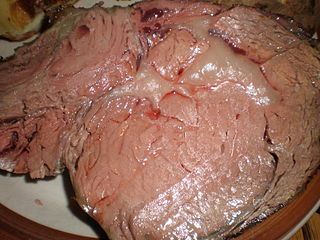 I’m sure many readers here share my interest on the broader topic of sustainability, whether it’s transportation, building design, or agriculture. And we can certainly count on the Sierra Club to keep us posted on many of these larger topics. I recommend their article here on
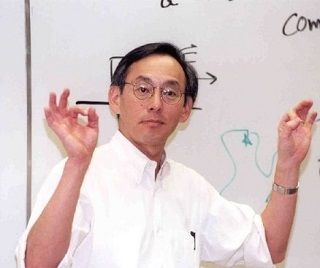 In the video I’ve linked, the young CEO of a high-tech start-up called Amprius, Chinese-born Yi Cui, talking about his background (Ph.D. from Harvard, currently a professor at Stanford), but, more importantly, providing a summary of his passion:
  There are many of us who fail to realize the results of our actions upon the environment, but we can do a lot to improve upon our habits to do better. The following tips will give you an idea what you can do to make your self-storage experience a better one: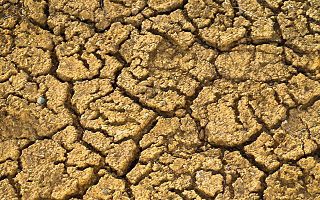
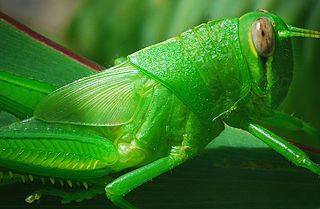 I had a pleasant surprise earlier this afternoon that I thought I’d mention. A docent who was leading a small group of us through an exhibition of contemporary art and concepts in modern architecture happened to mention that a certain designer’s works were aimed at minimizing energy in the heating and cooling of our buildings. Better yet, the artist/architect had been trained as a biologist, and had gotten her ideas from the way grasshoppers cool themselves in the hot summer afternoons.
 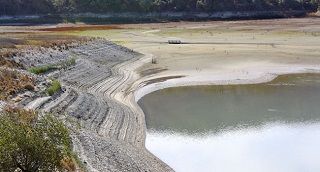 I’m sure most readers are aware that
  Last evening, I had an interesting conversation with a reader that I’d thought I’d share. She asked two good questions: