In response to my piece yesterday on the integration of renewables in the grid-mix, frequent participant Gary Tulie wrote a wonderfully insightful comment, underscoring my point that, considering the smallish presence of clean energy in the U.S., the intermittence of solar and wind present very little reason for concern.  He goes on to discuss why, and discusses the role of load shifting, the improved prediction of supply and demand, better grid integration, geographical dispersion, and energy storage.

All perfectly true.  So why aren’t we heading in this direction at 100 miles per hour?  The biggest single reason is that the electric utilities are among the most conservative organizations on Earth, and, since they have no incentive to make any of this happen, are perfectly content with the status quo. (more…)

A reader writes in:

Hi, Craig – I’ve been reading your blog for a while now. Thanks for what you’re doing. Also enjoyed your book, “Is Renewable Really Doable?” My question is this: how to counter the alarmist articles out there about the unreliability of renewable (because intermittent) energy? In researching this I’ve run across a couple of articles that the naysayers are just eating up whole. Example: last September in the Telegraph. And there are others, as I’m sure you know. (more…)

Tagged with: , , , , , , , , , , , , , , , , , , , ,

There is a pretty big buzz surrounding renewable or ‘green’ energy at the moment.

We’re all looking to do our bit for the planet – reduce our carbon footprint, lessen our reliance on fossil fuels, and help the environment – but we’re all feeling the pinch. Can we really make a difference whilst saving money at the home?

The answer is, of course, yes. Here are a number of ways renewable energy can help you do your bit for the planet whist saving money in the home:

1. Solar thermal vs. Photovoltaics (more…)

Tagged with:

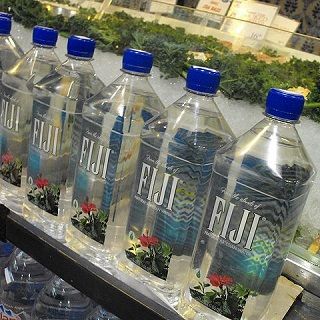
Unfortunately, this week’s conference at UCLA — The Financial Implications of Going Green — featured a few “corporate commercials,” i.e., shameless, disingenuous (and dull) promotion of an organization’s work in becoming a better steward of the environment, with little or no value to the audience.  It upsets me to hear about a guy droning on about how the parent company of Fiji bottled water, an environmental obscenity if there ever were one, is installing solar panels on its headquarters roof.  

Having said that, there were a few excellent presentations, including an interesting analysis of the circumstances under which certain companies clearly “do well by doing good.”   In particular, a great number of case studies point to significant value accruing to companies that are sincere about sustainability initiatives, not only in terms of public image, but in terms of their ability to attract, engage and retain high-quality employees.  

This is certainly a result that has intuitive appeal.  No one wants to work in a setting that is oppressive, filling the world with damaging products that come at a terrific expense to the planet, and this is especially true of bright, thoughtful people.  This phenomenon explains, for instance, the steady stream of requests I receive from young people willing to do unpaid internships; some folks simply want to get behind the large and growing movement to improve conditions on the planet. 


Tagged with: , , ,

Here’s a video in which Bill Moyers talks about his friend Bernard Rapoport, business mogul, philanthropist, activist, and human rights advocate, who passed away last March.  I have a fond recollection of Rapoport as well; I did a presentation to him in his Waco, TX office a few years ago.  Even in his 90s, he was bright, engaged, and clearly interested in making the world a better place.

I raise this point as I gear up to start my “corporate role models” blog, in which I’ll be documenting hundreds of corporations’ efforts to develop products and services that reduce waste, conserve energy or other resources, create better efficiencies, reduce toxicity, and improve conditions for workers up and down the supply chain.

Tagged with: , , , , ,

At yesterday’s conference at UCLA — The Financial Implications of Going Green — I happened to sit in front of a graduate student in corporate sustainability – I forget the exact name of her program.  When I asked what she was learning,  she told me about a course she took last semester in transportation.  I asked her for some details, and she reeled off the precise topics that I discuss when I’m asked about the future for transportation: creating consumer incentives to find alternatives to driving, car-sharing, ride-sharing, mass transit, walking/bicycling, small urban commuting vehicles, etc. 

It was a pleasantly surprising experience to realize that a great number of young people are being taught – at all levels – that we’re about to undergo a radical transition in personal mobility. 


Tagged with: , , , , , , , ,

Those of us who are concerned that our increased production of greenhouse gases is causing global climate change often point to the burning of coal to produce electricity as perhaps the single most disastrous phenomenon occurring in human civilization.  And, breaking that down, the largest, thorniest sector of this problem is China, with its huge population demanding more energy for its increasingly Westernized lifestyle. 

So where is all this coal coming from?  In large measure, the U.S.  In particular, Peabody Coal and SSA Marine are moving forward with plans to build the largest coal export terminal in the country in Washington — the Gateway Pacific Terminal

If you’re of mind to make a comment on this, you may want to check out what CREDO is trying to get done, i.e., urging people to get the Army Corps of Engineers to review the environmental impacts of the project.


Tagged with: , , , , , , ,

According to a report released last week by the UK’s Institution of Mechanical Engineers (referred to as IMechE) as much as half of all the food produced worldwide goes uneaten. This already astonishing figure is thrown into even starker relief when it is considered that, according to the latest figures from the United Nation’s Food and Agriculture Organisation of the United Nation (FAO) as many as 870 million people (that’s 12% of the world’s population) are undernourished.

Whilst in the developing world, food waste is often down to imperfect farming practices, in the first world the poor use of the resources available to us is the chief problem. Here’s a look at three of the main factors that are helping to maintain this flawed system: (more…)

Tagged with: , , ,

I write this from the beautiful campus of UCLA, specifically, the Anderson School of Management, where I’m a few minutes early for a conference called: Sustainability Conference – The Financial Implications of Going Green.

After all, this really IS the central issue: If the world is, as we all hope, truly “going green,” it will be happening within the context of economic implications. To me, this is what makes the concept of a responsible and sustainable use of energy resources so tantalizing: (more…)

Tagged with: , , , , , , , , , , , , , , , , , , , , ,

Photobucket

I write often about the “tough realities” of renewable energy, and sustainability more generally.  A good example is coal-fired power plants, and the fact that we can generate base-load electricity at 3 or 4 cents a kilowatt-hour with coal, unquestionably the lowest cost of any source.  If you want clean energy, it’s going to cost you a bit more, and the question, therefore, is one of sacrifice; in particular, is our society willing to pay a bit more for electricity that does not cause lung disease, ocean acidification, climate change, mountaintop removal, etc? (more…)

Tagged with: , , , , , , , , , , , , ,