
Biofuels — The World Energy Scene Put Into Perspective

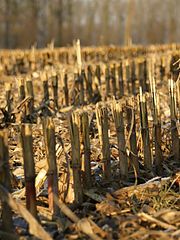 Here’s an article on biofuels, the first part of which everyone should read, as it frames the world energy situation very nicely. Yes, we face a situation in which our planet’s energy demand will double in the next 40 years, and fossil fuels will soon prove insufficient (not to mention their externalities in terms of ecological and health-related consequences). The author points out the silliness of the debate about drilling for oil on federal lands in the Arctic National Wildlife Refuge (ANWR). “If you drilled the provable oil reserve in the entire federal ANWR and flooded the world market with it – the reserve would be used up in 9 days, at 2050 consumption rates.”
So it appears that we’re off to a good start here; the premise seems solid. I’m not sure how you get from there to the conclusion, however. The point of the article is that our focus on renewables and energy storage is misguided and that any or all of the 15 biofuels companies it names are here to save the day. The first four are “headed for commercialization now” and the other 11 are “farther down the road.”
I’m rooting for you guys, but I’m skeptical.
Life forms evolved over four billion years to convert sunlight into chemical energy that would support the organisms’ survival, growth and reproduction, not to store it in great abundance beyond the foreseeable need, so that we could come along and put it in our gas tanks. Converting solar energy in the form of biomass to chemical energy in liquid fuels can be done, as we’ve all seen, but by its very nature, it’s extremely inefficient, and thus, resource-intensive. I believe this is the reason that, after decades and billions of dollars in R&D, there are no demonstrations of commercially viable approaches in this space. Are there really some that are “headed for commercialization now?” Could be. But I’ve been hearing that for a long, long time.
 Of all the byproducts of our gross extravagance in energy consumption over the last half century, the one that could be most toxic to all of us is the way it has turned brother against brother with regard to environmentalism. Here’s the website of the
 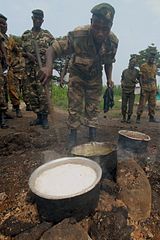 A reader from Nigeria sent me a business plan on an ethanol plant that would provide a far cleaner way for West Africans to cook their food than their current approach, which is a combination of kerosene and wood gathered from rapidly disappearing forests.
 Late last night I was on a Skype call with a friend, a clean energy aficionado based in Central France. He went on at length about some of the projects he’s pursuing, several of which are various types of pyrolysis plants that will invoke some extremely specific equipment that I never knew existed. I learned about machines that process corn and miscanthus, as well as:
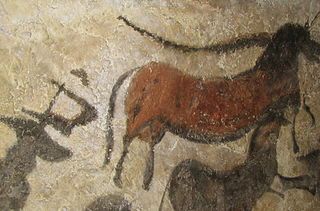 It was 72 years ago on this date that a group of teenagers came across the now-famous cave paintings in Lascaux, France. I’ve always regarded this discovery as integral to the path on which Homo sapiens finds itself: gradually coming to see that our common humanity is a far more important feature of our species than our surface-level differences.
  I’d like to invite you to our September webinar, featuring my friend and colleague Andy Lower, Executive Director of The Eleos Foundation. Eleos is a dynamic non-profit, that, through its for-profit subsidiaries, invests in and partners with social entrepreneurs who effectively implement high impact, early stage, pioneering market based solutions in the fight to eradicate extreme poverty.
 I just sat down over lunch with a printed publication to which I subscribe called the “
 Here’s a recently recorded hour-long


