I’ll soon be updating our list of renewable energy investment opportunities, as I’ve come across a few more that I think are excellent. One is a municipal solid waste (MSW) to electricity via pyrolysis project in a small, stable, but developing country where the project will bring electrical power to many towns and villages for the first time. As I’ve discussed often before, such efforts have enormous philanthropic value, but they can also be extremely lucrative. (more…)
I sympathize with those tasked with putting a precise dollar figure on the externalities of fossil fuels. Sure we know there are costs to society in terms of lung damage and long-term environmental damage, but what are they?
In a piece I wrote yesterday on clean energy power density, I mentioned that renewable resources do, in fact, come with a number of limitations, owing mainly to the fact that the infrared, visible, and ultraviolet light we receive at ground level from the sun at its zenith is fixed (1004 Watts/square meter). The “beauty” of fossil fuels is that they circumvent that limitation; (more…)
Of all the great minds whose essays I read on the world energy scene and its surrounding geopolitical implications (global hostility, climate change, world economics, etc.) Michael T. Klare just may be my favorite. Dr. Klare:
I’m proud to serve as a member of the Advisory Board for the Clean Business Investment Summit (CBIS), held annually at the University of California at Santa Barbara in the late summer. This year’s event on September 12th will be the fourth such meeting of which I’ve been a part, and I have to say, to date, each one has been bigger and better than the one before it.
CBIS brings together good ideas in clean tech with investors – an enterprise to which we’re no strangers here at 2GreenEnergy. Thus far, over $110 million in angel and venture capital has been raised as a direct result of introductions made at CBIS – not too bad, in my humble estimation. (more…)
Here’s an article about renewable energy power density, i.e., the amount of power available in a certain area, measured perhaps in Watts per square meter. The article makes the point that, as the world’s population continues to move to the cities, we’ll have increasing difficulty generating the energy we need locally – especially if we do it with renewable resources, where we’re limited by the amount of radiation we’re receiving from the sun, or by the amount of energy in the wind that is blowing by us. If you’re having trouble imagining this, think of the absurdity of heating, cooling, lighting, and providing power for the equipment in the 2,158,000 square feet of office space in the Empire State Building by putting solar panels on the roof.
This, of course, is the reason that all the other technologies associated with the generation, transmission and distribution of electricity need to come along at the same time, in particular, high voltage transmission to bring enormous amounts of electrical energy over large distances with a minimum of line loss. If we still have a civilization here in 50 years, I predict that most of the energy consumed in the U.S. will come from PV, CSP, and wind scattered around the deserts and the plains, and that most of the energy for Europe will come from the Sahara.
Obviously, batteries don’t generate power. We all learned that in second or third grade. Maybe they think the homeowner has a coal-fired power plant in his garage? Sorry, I’m lost here.
I’d never come across the Geostellar Solar Index until a reader sent it to me just now. He writes: “Craig, Did you see this in your internet meanderings? I think it’s disturbing that in most states it’s more cost effective to buy T-Bills than to invest in solar. This, more than anything, is why we can’t get enough people into solar power in this country.”
Actually, if I’m reading this correctly, that’s not the case. They claim: (more…)
In hard times every business is paying particular attention to their bottom line. Tasks and processes are streamlined at every corner and all outgoing bills must be reduced to ensure that a business can still turn a profit. A key aspect of monitoring the bottom line for any commercial business is efficient use of utilities.
Residential electricity bills have soared in recent years and commercial premises are not exempt from the rise. There are several things one can do to reduce electrical usage and subsequent bills by monitoring working habits and developing smart work practises. The time to start is now… (more…)
The world is our oyster. We’ve shucked it, eaten it, piled the shells as high as they’ll go and are about to start an avalanche. We simply have to make some changes in our consumption of the earth’s resources and our “give me another one” attitude if we want to leave anything for future generations. Fortunately, this can be done relatively easily AND save us money while we do it! Below are a few easy ways to help reduce our footprint on the earth, while saving a few dollars along the way.


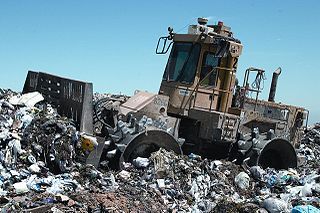 I’ll soon be updating our list of renewable energy investment opportunities, as I’ve come across a few more that I think are excellent. One is a municipal solid waste (MSW) to electricity via pyrolysis project in a small, stable, but developing country where the project will bring electrical power to many towns and villages for the first time. As I’ve discussed often before, such efforts have enormous philanthropic value, but they can also be extremely lucrative. (more…)
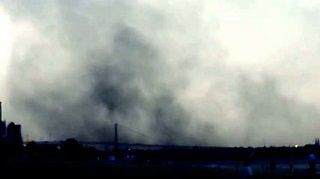 I sympathize with those tasked with putting a precise dollar figure on the externalities of fossil fuels. Sure we know there are costs to society in terms of lung damage and long-term environmental damage, but what are they?
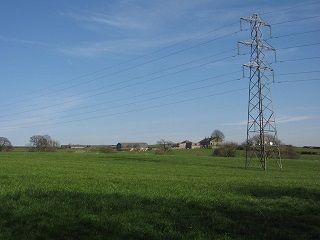 In a piece I wrote yesterday on
 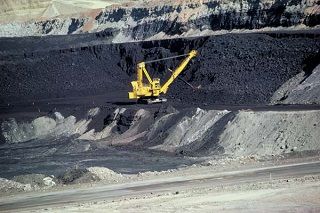 Of all the great minds whose essays I read on the world energy scene and its surrounding geopolitical implications (global hostility, climate change, world economics, etc.) Michael T. Klare just may be my favorite. Dr. Klare:
 I’m proud to serve as a member of the Advisory Board for the
  Here’s an article about
  A reader asked me to comment on the article linked below, but frankly, I simply don’t understand it.
 I’d never come across the
  In hard times every business is paying particular attention to their bottom line. Tasks and processes are streamlined at every corner and all outgoing bills must be reduced to ensure that a business can still turn a profit. A key aspect of monitoring the bottom line for any commercial business is efficient use of utilities.